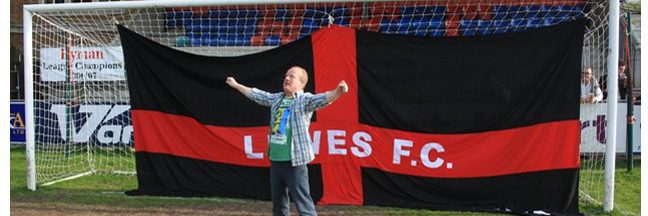
The Equality Conundrum at Lewes FC
Lewes FC, proudly nicknamed “Equality FC,” is the loudest voice in English football when it comes to gender equality. The club is celebrated as the first in the UK to provide equal budgets for its men’s and women’s teams. This commitment to fairness is a source of pride for fans and members alike.
As a fan-owned club, Lewes FC empowers its 2,500 members to stand for election to the Board of Directors, ensuring a democratic and transparent leadership. Board members serve limited terms to promote accountability and fresh perspectives.
However, despite this progressive ethos, the club has failed over the years to ensure fair representation of women on the board. While equality is preached on the pitch, it is sorely lacking in the boardroom.
The Current State of Affairs
While Lewes FC pays its male and female players equally and champions women’s rights, the current Board of Directors is composed entirely of men. That’s right—seven male board members are now responsible for running the club. The last elected female board member stepped down a few months ago, leaving a gaping hole in representation.
The club constitution allows for co-opted directors to fill gaps in expertise or representation. Co-opted directors can influence decision-making but do not hold voting rights. After the last co-opted female board member resigned, the board was left with seven men wielding voting power and just one woman in a supporting role. This glaring imbalance feels like a throwback to the pre-Suffragette era, a bitter irony for a club branded as the “home of Equality FC.”
Adding to the disparity, the club’s Chief Operating Officer, a woman, is effectively subordinate to the male-dominated board.
The Club’s Defence
When challenged, the club tends to deflect blame, often pointing to its voting system or a supposed lack of women standing for election. But let’s face it—humility and self-reflection have never been Lewes FC’s strong suits.
The reality is this: the board has the power to co-opt new members to address imbalances, and yet it has failed to act. Co-opting directors is not a complex process, but it requires effort, commitment, and a genuine desire to uphold the club’s stated values.
How to Address the Problem
Running a democratic, community-owned club means actively engaging with the local community to identify talented individuals who can contribute. The board should be proactively seeking out women and others who represent the diversity of Lewes. With tools like social media, this is easier than ever.
Instead of taking initiative, the board has been content to sit back and make excuses. It’s not that there aren’t women willing to get involved—it’s that the club has made no serious effort to find them.
A Broken Election Process
Another glaring issue is the club’s disgraceful approach to board elections. Ever since Lewes became a community club, successive boards have failed to prioritize or promote the democratic process. Elections are poorly publicized, turnout is abysmal (often less than 20%), and the process feels more like a box-ticking exercise than a genuine attempt to engage members.
Here’s how it works now: members are notified of upcoming elections, prospective candidates submit manifestos, and these are published on the website. That’s it—the bare minimum required by the constitution. No wonder the process fails to inspire enthusiasm or attract high-quality candidates.
The result? A mix of board members, some of whom are passionate and competent, and others who are out of their depth—lacking understanding of the club, its values, or even football culture. This weakens the board’s ability to lead effectively, leaving the club stuck in a cycle of missed opportunities and poor decision-making.
Lessons from Other Fan-Owned Clubs
Other fan-owned clubs, like FC United of Manchester, show how things should be done. They engage members effectively, promote elections widely, and ensure their boards reflect the communities they serve. Why isn’t Lewes FC following this example? For a club that claims to be a leader in equality and fan ownership, its approach is the complete opposite of best practice.
Practical Solutions
To attract diverse board members and improve democracy at Lewes FC, here’s a list of simple, actionable steps:
- Announce election dates early and begin raising awareness well in advance. Stop sending repetitive, generic emails that members tune out.
- Explain the importance of the board’s role, showcasing how directors influence club policy and operations.
- Share success stories of past board members who made tangible improvements, like funding new pitches or enhancing facilities.
- Create detailed candidate profiles, including their backgrounds, visions for the club, and reasons for running. Publish these on the website, social media, and newsletters.
- Interview candidates and share videos or Q&A sessions online.
- Host a live “Town Hall Meeting” at The Dripping Pan where candidates can interact with fans and answer questions in person.
- Use matchdays to promote elections through PA announcements, banners, flyers, and face-to-face engagement with staff.
- Engage local media to highlight upcoming elections and their importance.
By taking these steps, Lewes FC can attract a more diverse and competent pool of candidates, ensuring the board better reflects the club’s values and the community it serves.
Fixing the Bigger Picture
The club faces other operational issues that must also be addressed. Long queues for food and drinks, a poorly managed website, and lackluster fan engagement are all signs of systemic problems. Despite having staff dedicated to these areas, the club is failing to capitalize on its potential.
Lewes is a prosperous town full of people eager to contribute. Many residents retire early and look for new interests, making them an untapped resource. But instead of reaching out, the club seems content to limp along, relying on hollow rhetoric rather than meaningful action.
The Way Forward
Lewes FC has the potential to thrive as a well-run, inclusive, and financially sustainable club. But this will only happen when the board starts taking elections and diversity seriously. Appointing someone to oversee these processes, with the support of a working group, could be the first step in transforming the club into the model of democracy and equality it claims to be. Until then, the club risks remaining a case study in unfulfilled potential.

 The Rights of Fans.