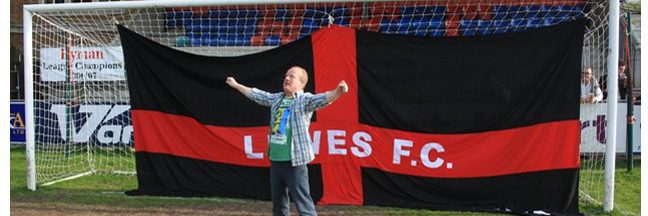

Despite Lewes being a wealthy town with incredible human and financial resources, the club continues to overlook these opportunities. At a recent Town Hall meeting, a board member revealed a shocking fact: only 2% of the club’s turnover last year came from local sponsors. This is appalling for a community football club and a stark contrast to the days of private ownership when local sponsorship income was 500% higher pro rata. The club’s failure to engage local businesses is mirrored by its failure to properly embrace volunteers—not just for general tasks but for meaningful roles that could improve the club’s operations and culture.
For years, I’ve advocated for the establishment of volunteer subcommittees to enhance the club’s efficiency and involve the community in its governance. I was pleased to see the current board finally acknowledge this common-sense solution after 15 years of inaction. However, the obsession with hiring paid staff continues, with potentially £150,000 spent annually on non-playing roles that could be handled by skilled volunteers at no cost. This money could and should be redirected to the playing budget. After all, Lewes FC is a football club—not a politicised business project?
I’m concerned, as I’ve seen this happen in other organizations, that the board’s close working relationship with office staff prevents them from objectively assessing the value of these roles. For example, the club employs a certain pivotal individual, yet it’s widely known that this individual doesn’t even respond to emails—a glaring failure of accountability. A free volunteer would be a far better solution.
Lewes FC needs to refocus its priorities. It must reconnect with the community, embrace the wealth of talent and resources available locally, and stop wasting money on ineffective staff roles. Volunteers built the foundation of this club, and volunteers can ensure its future success. It’s time to remember that this is a football club, first and foremost—not a failed business experiment.
So here are my thoughts on why volunteers/sub-committees are a far better option for Lewes FC over paid operational staff.
Don’t paid staff merely create a perception of exclusivity or hierarchy, whereas volunteer committees reinforce the club’s identity as a collective, fan-driven organisation?
We already have an unstable cash flow and lack funding, so relying on volunteers removes the financial burden of hiring paid staff. This allows funds to be directed toward critical areas, such as player development, facilities, or debt reduction. Do we really need to waste valuable resources on unworkable business plans rather than direct this time and energy into building an effective volunteer army?
Volunteers, especially those who are club supporters, are often willing to contribute their time and skills for free because they’re passionate about the club’s success. This eliminates the need to stretch already limited budgets to cover salaries. It is so obvious, yet this continued inability to tap into free human resources remains such a bizarre paradox at Lewes FC.
A fan-owned club thrives on its community spirit. Volunteer sub-committees give fans a sense of ownership and involvement, aligning with the ethos of a fan-owned model. When supporters are directly involved in shaping the club’s future, they’re more likely to feel invested in its success and drive that success.
Engaging fans as volunteers strengthens the connection between the club and its community, building trust and loyalty.
Hiring paid staff for roles that could be handled by passionate volunteers goes against the spirit of fan ownership, which is about collective effort and shared responsibility.
Volunteers often bring diverse skills and ideas. Many fans have professional expertise in areas like finance, marketing, or event management, and they’re motivated to apply their talents for the club’s benefit without financial compensation.
Volunteers can form smaller, focused sub-committees to address specific challenges, such as fundraising, sponsorships, or marketing campaigns. This decentralized approach allows for more adaptability and creativity than rigid, top-down management. I fail to understand why the board are espousing sub-committees run by volunteers at a cash strapped club and at the same time maintain the ridiculous levels of backroom admin.
Paid staff often work within strict job descriptions and timelines, whereas volunteers can adjust their contributions based on the club’s immediate needs.
Volunteers who are also fans have a unique understanding of the club’s culture, challenges, and opportunities. They are more likely to propose realistic, grassroots solutions that align with the club’s identity, as opposed to generic, business-oriented approaches from hired staff who might not share the same connection.
Subcommittees are better suited to brainstorm and test small, incremental solutions, such as hosting local fundraising events, rather than trying to implement costly, large-scale plans with no guaranteed success.
The current goals in the new Lewes FC share issue/business plan, lack actionable plans funding sources, and timelines. Volunteers are well-placed to create these plans, as they’re closer to the club and may already have ideas for stabilise finances, improving cash flow, or increasing revenue through community-driven initiatives. New volunteers may have previously volunteered in Lewes Bonfire and have unrivalled experience.
Paid staff would need clear job descriptions, objectives, and funding to deliver results, which are absent in the current proposal. Volunteers can start working immediately, even with limited resources.
Relying on volunteers ensures transparency and accountability. Fans can see directly how the subcommittees are contributing to the club’s goals and can hold them accountable through open communication.
Historically, many fan-owned clubs or grassroots organizations have achieved success through volunteer committees. These committees can organize fundraising events, negotiate sponsorships, and manage community engagement.without needing a large operational budget.
Using volunteer subcommittees rather than paid staff is both practical and ethical for a fan-owned club. It aligns with the spirit of fan ownership, engages the community, reduces costs, and leverages the passion and skills of the club’s supporters. Volunteers are uniquely positioned to understand the club’s needs and implement realistic, grassroots solutions, making this approach a better fit for the current situation.

 The Rights of Fans.