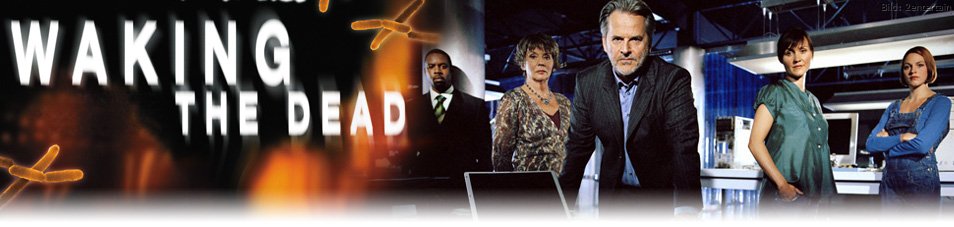
Currently the BBC is repeating Waking the Dead, which ran from 2000 to 2011, delivering 92 episodes across nine series, all with consistently high quality. It’s a testament to what a crime drama can achieve when it focuses on the fundamentals: compelling mysteries, sharp storytelling, and old-fashioned detective work. It maybe out of date but it is also refreshing. Sure, it maybe lacks or is enhanced by the outdated production, but jeez, don’t crime dramas today often feel dragged out, bogged down by excessive backstories and convoluted subplots that are stretched out for advertising revenue to the detriment of the modern-day crime drama.
A True “Whodunnit”
At its heart, Waking the Dead was about solving the crime. Each episode revolved around cold cases that were reopened by the dedicated Cold Case Unit. These weren’t simple mysteries; they were intricate puzzles that kept us hooked until the denouement, final reveal. The show didn’t waste time on unnecessary distractions. Instead, it invited audiences to think, analyse, and work through the evidence alongside the detectives, making every solved case feel like a shared victory.
Unlike many modern crime dramas, which get sidetracked by their characters’ personal lives, Waking the Dead thankfully kept its focus firmly on the investigations. While the team’s personalities and dynamics were interesting, they never overshadowed the cases. Boyd, Grace, Frankie, and the rest of the unit weren’t there to indulge in melodrama, they were there to solve crimes and deliver justice.
I’ve just finished the new Day of the Jackal which fell into the same trap so many modern crime dramas do—stretching out the story unnecessarily with backstory and soap-opera-like subplots. The whole beauty of the original Day of the Jackal was its taut, razor-sharp focus on the mission and the meticulous tension that came with it. The Jackal was a professional, a ghost, and his life outside the job was left deliberately vague to maintain the mystique and focus on the assassination plot.
No Gimmicks, Just Grit
One of Waking the Dead’s standout qualities was its no-nonsense approach. It didn’t rely on flashy cinematography, over-the-top action, or overly stylized storytelling. The drama came from the cases themselves: the search for evidence, the psychological dissection of suspects, and the race to uncover buried truths.
The show’s gritty realism added to its authenticity. It didn’t sugarcoat the grim realities of crime, but it also avoided sensationalism. The focus was on justice, not shock value. In a world where crime dramas are increasingly about flash over substance, Waking the Dead stood out for its grounded, intelligent approach.
Maintaining Excellence Across Nine Series
What makes Waking the Dead particularly impressive is how it maintained its quality over 92 episodes. Many modern crime series drag on far too long, diluting their original appeal with filler episodes and unnecessary extensions. Yet Waking the Dead never felt bloated. Every episode had purpose, and the storylines remained fresh and engaging throughout its run.
That’s a rarity in TV today, where it’s common for shows to prioritize quantity over quality. The series’ ability to consistently deliver gripping mysteries over nearly a decade is a testament to its sharp writing and strong cast.
The Perfect Ensemble
The characters in Waking the Dead elevated the series without overpowering it. Boyd, played by Trevor Eve, was a fiery, relentless detective whose passion and intensity drove the team forward. His outbursts weren’t just for drama—they reflected his deep commitment to justice. Grace Foley (Sue Johnston), the psychological profiler, was the calm counterbalance to Boyd’s volatility, while Frankie Wharton (Holly Aird) brought a no-nonsense attitude to the forensic side.

 The Rights of Fans.