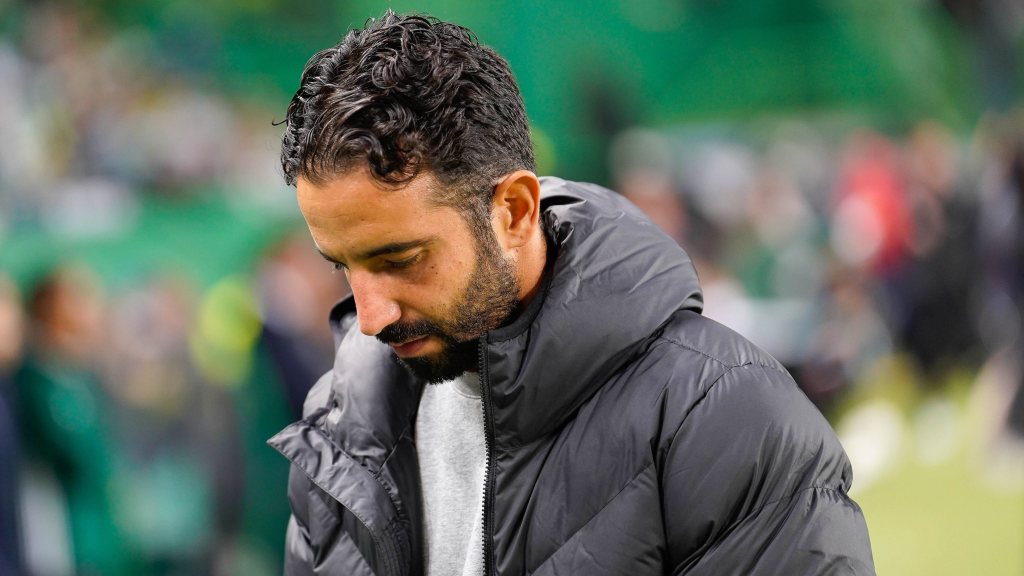
When Rúben Amorim took the reins at Manchester United, fans expected a new chapter—though few predicted it would be a tragicomedy. Ten games into his tenure, with just two wins, three draws, and five losses, Amorim hasn’t just failed to steady the ship; he’s actively driven it into uncharted depths of despair.
Not content with his disastrous start, Amorim poured gasoline on the flames by labeling his squad as “the worst team in Manchester United history” and openly speculating about relegation. These comments, while sensational headlines for the tabloids, raise an uncomfortable question: is he on track to become the worst manager in the club’s storied history?
This blog delves into why Amorim’s lack of experience, stubborn tactics, questionable man-management, and a baffling decision by Manchester United to appoint him in the first place make his tenure one of the most puzzling in modern football.
An Unfit Gamble for a Historic Club
Manchester United is not a club that takes risks lightly—or so we thought. Appointing an unproven manager like Amorim, whose experience is limited to the Portuguese league, seems like a roll of the dice at best.
United’s global stature demands a manager with an elite pedigree, capable of handling the relentless scrutiny and the pressure to deliver silverware. Instead, the club has handed the reins to a manager whose résumé, while respectable for its league, pales in comparison to what is required at Old Trafford.
This is not a club where you “learn on the job.” Compare this decision to the appointment of Sir Alex Ferguson, who arrived with a proven track record of success at Aberdeen, where he disrupted the dominance of Celtic and Rangers and even conquered Europe. Ferguson’s appointment was calculated; Amorim’s feels like a shot in the dark.
Stuck in the 3-4-3 Rut
One of the most glaring critiques of Amorim is his tactical rigidity. His insistence on deploying a 3-4-3 system, regardless of the squad’s strengths or the opposition, has been a major contributor to the team’s poor results.
While this formation brought success at Sporting CP, the Premier League demands adaptability—a quality Amorim seems to lack. The system’s flaws are glaring:
- Exposed Flanks: Wing-backs frequently leave spaces that opponents exploit, leading to the 18 goals conceded in 10 games.
- Midfield Overrun: A two-man midfield struggles against more robust setups, leaving United unable to control games.
- Player Misfits: Key players like Marcus Rashford and Bruno Fernandes have looked uncomfortable in roles dictated by the rigid 3-4-3.
Contrast this with Ferguson, whose adaptability allowed United to dominate across different eras and against varying opposition. Ferguson’s teams adjusted tactics seamlessly, serving the strengths of his players rather than forcing them into unsuitable roles. Amorim’s inability—or refusal—to adapt is a glaring flaw.
Man-Management: An Exercise in Alienation
Amorim’s psychological approach has been equally concerning. His public remarks about the team being the worst in the club’s history and a potential relegation candidate do little to inspire confidence. Instead, they risk alienating players and fracturing the dressing room.
This contrasts starkly with Ferguson’s man-management style. While Ferguson’s infamous “hairdryer treatment” was a staple of his reign, he balanced it with loyalty and encouragement, always protecting his players in public. His approach motivated players to perform beyond their potential and fostered a sense of unity.
Amorim’s strategy of public denigration feels more like damage control than constructive leadership, and it’s unlikely to win over a squad already under pressure.
A Legacy at Risk
Manchester United’s identity has been built on a legacy of resilience, innovation, and success. Under Ferguson, the club became synonymous with dominance, winning 13 Premier League titles and two Champions League trophies. Ferguson built teams that reflected the club’s ethos: relentless, adaptable, and united.
In contrast, Amorim’s tenure has so far been defined by stagnation and controversy. His stubborn tactics, public criticisms, and lack of experience have raised doubts about his ability to lead United out of its current malaise.
For a club of United’s stature, taking such a gamble on an inexperienced manager seems almost irresponsible. This is not a mid-table side in need of a fresh start; this is one of the biggest clubs in the world, and its decisions should reflect that ambition.
Conclusion: The Wrong Man at the Wrong Time
While Rúben Amorim may one day prove to be a capable manager, his early tenure at Manchester United has done little to suggest he is ready for a job of this magnitude. The club’s decision to appoint him feels like a reckless gamble, particularly at a time when stability and expertise are desperately needed.
With poor results, rigid tactics, and a man-management style that risks alienating his squad, Amorim’s tenure has all the makings of a short and painful chapter in Manchester United’s history. At a club that once set the standard for excellence under Sir Alex Ferguson, gambles like this only serve to tarnish its legacy further.
For a manager who has described his team as the “worst in Manchester United history,” the real question may be whether he is on track to become the worst manager in Manchester United history.

 The Rights of Fans.