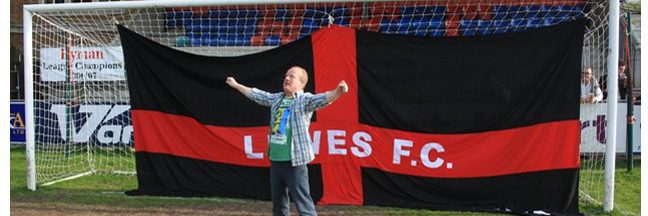

Some thoughts on the latest resurrection of the Lewes FC Holdings Ltd proposal as set out in the club email 18/3/25. We will update this with, in keeping, the subsequent ‘making it up as they go along’ email 19/3 and the forthcoming Chairman’s thoughts.
The latest club email certainly puts a brave face on what is, in reality, a glaring failure of due diligence. Lewes FC has spent a vast amount of time and money developing a business proposal that they didn’t even bother checking with the relevant authorities to see if it was viable. Now, after finally engaging with those authorities, they have been told it isn’t. This is hardly an inspiring foundation for attracting investors—if the club can’t even get the basics of its investment proposal right, why should anyone have confidence in its future governance?
Not only has the board failed in this regard, but the very premise of the investment has fundamentally changed. During consultations, we were told that the purpose of the investment was for owners—who were supposedly the only people allowed to invest—to do so based on an “emotional commitment” to the club. Now, in a staggering U-turn, the club is demanding that owners relinquish their ownership in order to invest. This is an astonishing contradiction and undermines the very principles upon which the proposal was initially sold.
What’s particularly galling is the timing. After weeks of relentless emails extolling the virtues of this investment (without acknowledging a single downside), we are now informed of these fundamental changes on the very same day the election forms are sent out. This pattern is eerily reminiscent of the Mercury 13 debacle, where the board clearly intended to push through a decision without a vote. They will undoubtedly deny this, just as they did before, but if they had always planned a vote, they would have made this clear from the outset. Make no mistake—this proposal is even worse than Mercury 13 when it comes to governance, community ownership, and the ethics of fan-led football.
A Financial Crisis in Disguise
The use of the word “imperative” in the latest email marks a significant shift. Previously, the narrative was about transitioning the club for its long-term benefit. Now, suddenly, the restructure is being presented as an urgent necessity. This is a clear admission of what we all suspected: Lewes FC is in deep financial trouble. The club should stop trying to spin this as an exciting new model for sustainable growth and call it what it is—a desperate attempt to avoid looming insolvency. Ironically, this is the one part of the email I actually agree with.
The claim that this restructure “will position us as a sustainable local business” is equally dubious. To date, the club has provided no financial projections to support this assertion. In reality, the immediate priority of this proposal is not to build a sustainable business model but simply to dig the club out of its current financial hole. This is not strategic planning; it is crisis management.
A Visionary Idea? Hardly.
The email describes this proposal as a “visionary idea.” Let’s be clear—it is nothing of the sort. What it actually represents is Lewes FC attempting to have its cake and eat it too. If the club can no longer attract competent leadership under its current community model, then it should acknowledge this and transition fully to private ownership. Instead, it is trying to retain the “community club” label while effectively operating as a privately run entity. That is not visionary—it is a contradiction. Fan ownership is not failing because it is an outdated model; it is failing because this club has been mismanaged. It is insulting to suggest that the wider concept of fan ownership is to blame.
Misleading Consultations and Dubious Claims
The club claims to have engaged in months of planning and due diligence before arriving at this proposal. Yet, somehow, they have only just realised that their original investment model was unworkable. Owners were told they could invest based on their commitment to the club—now they are being told they must relinquish their ownership in order to do so. The explanation? “This is not our preferred model, but it is our only route forward.” That is simply not good enough. This level of ineptitude does not inspire confidence; it demonstrates a club blundering towards an uncertain future with little grasp of governance or financial ethics.
The alternative “community credits” investment model being dangled as a consolation prize is equally unconvincing. Previously dismissed by the club as an undesirable option, it is now being presented as a potential compromise. However, there is no clarity on how it would work, and given the club’s track record, it is difficult to believe it will ever be implemented. This feels like a last-minute attempt to placate the FSA while smoothing the transition to de facto private ownership. If this option were genuinely viable, it would have been fully developed and presented alongside the main proposal, not introduced as an afterthought.
The Role of Volunteers and Governance Concerns
The claim that “having volunteer board members and a handful of staff can only take the club so far” is simply false. Fan-owned clubs elsewhere are thriving precisely because of their reliance on committed volunteers. FC United of Manchester recently put out a call for volunteers to help with office work and now has a team of nine people efficiently managing club operations. That is what real community ownership looks like. The problem at Lewes FC is not the volunteer model—it is the club’s inability to harness it effectively.
The proposed executive board structure raises further concerns. The vision is for a mix of paid staff, volunteer professionals, and community group members. But what is the point of having a community club if an unelected executive board ultimately calls the shots? This proposal effectively acknowledges that the current leadership has failed to run a fan-owned club properly, yet instead of addressing these failings, the solution is to dismantle the community ownership model while continuing to use it as a branding exercise.
Conclusion
Lewes FC’s latest proposal is not the visionary step forward it claims to be. It is a poorly conceived, reactionary measure driven by financial desperation. The club has demonstrated a shocking lack of competence in handling the investment process, contradicting itself at every turn. The insistence on retaining the community club label while moving towards private-style governance is not just impractical—it is dishonest.
If the club is in financial trouble, it should be upfront about it. If the leadership believes fan ownership no longer works, they should be honest about that too. But what they should not do is try to bulldoze through a half-baked proposal that undermines the very principles of community ownership while pretending to uphold them.
The owners of this club deserve better. They deserve transparency, competent leadership, and a genuine say in the future of Lewes FC. This proposal delivers none of those things.

 The Rights of Fans.