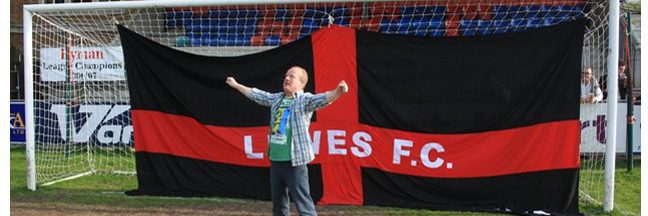

Bradley Pritchard’s appointment as Lewes FC’s new men’s first team manager carries a romantic symmetry. After more than 100 appearances and three seasons on the pitch, the Hall of Famer returns to the Dripping Pan, not to lace up his boots but to lead from the dugout. But beneath the warmth of nostalgia and the affirmations about purpose and community, one has to ask whether a rookie manager is the right choice at such a precarious moment in the club’s recent history.
This isn’t a token gesture. Pritchard’s appointment is deliberate and idealistic. He’s not simply a former player with club heritage; he’s a thinker, a developer, someone who sees football as a vehicle for growth, identity, and culture. His rhetoric speaks to values over ego, to building long-term cohesion rather than short-term hype. It’s a vision that fits Lewes perfectly, on paper, at least. His emphasis on belonging and purpose resonates in a sport that too often prioritizes outcomes over integrity. He doesn’t promise revolution. He promises process.
The timing is unique, in that at a time when the Board has been flooded with new directors seemingly intent on steering the club back to an emphasis on, can’t believe I have to say this, football….as well as community, Lewes and fan ownership, what better than to appoint one of our own to complete the symmetry?
There is precedent for this kind of homecoming at Lewes. The club has a habit of turning to former players for leadership. Jay Lovett, who served as academy manager and briefly took on the first team, wore the shirt across three playing spells. Simon Wormull moved into youth coaching before stepping up to manage. Darren Freeman, who began his career at Lewes before rising to play for Fulham, Brentford, and Brighton, returned as manager and guided the club to promotion. Admittedly these three teams were not top half of the Prem in those days! All three arrived with prior coaching experience, having earned stripes elsewhere before leading the Rooks.
Bradley Pritchard hasn’t. This is his first role in senior football management. He has had a couple of coaching roles in the last 12 months on his CV. That fresh perspective could be a strength, but it also opens up vulnerabilities. He is, by comparison, the least experienced managerial appointment the club has made in two decades. And Lewes is not in a position to offer a low pressure induction. After an off the pitch tumultuous 2024/25 season, the club needs not only cultural renewal but also urgent results.
This is where timing becomes crucial. While Pritchard’s character and convictions are admirable, the reality of non-league football can be ruthless. Squads need rebuilding, tactics need drilling, and points need gathering, quickly. Most clubs in this situation opt for experienced hands. Lewes has tried that route before with little success. Tim O’Shea and many managers that followed all arrived with respectable credentials and no connection to the club. None of them delivered the sustained uplift hoped for. In each case, familiarity with the level did not equate to long-term progress..
The question that has to be asked is whether, with the club in financial difficulties and hopefully changing tact off the pitch, with so much uncertainty, is now a good time to appoint a manager with no experience?
That backdrop doesn’t absolve Pritchard from scrutiny, it amplifies it. His margin for error will be narrow. He’ll need a solid backroom team, a clear recruitment plan, and a patient but prepared board. A new riikie manager needs a strong board behind him, with many rookie directors too with no experience this could open a can of very bad worms. If he’s given time to embed his philosophy, to mould a squad that reflects his values, this could be a long term success story. But the early stages will be telling. The first twelve games may carry more weight than all the vision statements combined. If results falter, even the most poetic of appointments can unravel fast.
Pritchard’s return is bold and idealistic. It’s also a gamble. The club’s recent history reminds us that managerial experience is no guarantee of success. But neither is its absence. What will matter now is clarity, support, and realism. Because while everyone wants this story to end well, football doesn’t always follow the script.
Craig Nelson was unfancied by many, especially with poor pre season results, but he got us off the block so quickly he is now managing a division above us within a year.
There is no reason at all Bradley cannot be a success if he has the talent to achieve. We could really do with consistency and less of a churn of players, so if he cuts the mustard, hopefully his connection to the club will not see him leaving after a season and we have to go back to square one again. Personally success or failure is 50/50, but at this level there is often no rhyme or reason to success, so any appointment is 50/50. Freeman was a nailed on success from the start, but circumstances aligned for that success story.
Steve ‘Ibbo’ Ibbotson for me was our best manager in the last 25 years and he was promoted from within, and handily was happy to work for free when the club was skint, with only youth management experience. The club connection and experience with the club can be such an important factor in potential success as Ibbo showed.
Speaking from personal experience, I’ve often struggled with making internal appointments for my businesses based on sentiment. When you know someone and want to see the best in them, your judgment can become clouded. In my years of employing people, this emotional bias has sometimes led to decisions that didn’t work out. Like the board at Lewes, I’ve made appointments out of familiarity, and while occasionally this has worked brilliantly, especially when the person already understands how I operate, it’s always a risk.
Right now, Lewes Football Club is in a state of flux. The direction of the club may be changing, and due to the nature of how it’s run, we don’t really know the true state of the finances. That uncertainty makes it absolutely vital to maintain our strong attendance figures. If the manager underperforms, we risk a drop in attendance—and that could lead to serious financial difficulties.
I’m genuinely pleased for Bradley. This is a bold and courageous appointment. That said, it’s not a decision I would have made at this stage in Lewes FC’s journey—or in Bradley Pritchard’s own journey, as he transitions into management. I fully understand his ambition and desire to take on this role, but I do worry that without the necessary experience at this level, he faces a high risk of failing early on. A rocky start could unfortunately damage his future prospects in football management.
That said, I hope, truly, for everyone’s sake that this brave decision pays off. And if it doesn’t, I trust that same bravery will be shown in making a quick managerial change. That would be best not only for Lewes FC but also for Bradley, who could justifiably say he wasn’t given the time or resources to succeed. Sometimes, career trajectories hinge on such early moments.
Best of luck to Bradley, now we have decent people on the board I will be back as a regular again and will be behind him 100%.
Come On You Rooks!

 The Rights of Fans.