English Football Clubs run by their supporters operate under a constitution — a brilliant framework that, if followed, can lead to real success. The problem is, there’s no statutory body to enforce it. And that’s where things can get messy. Very messy.
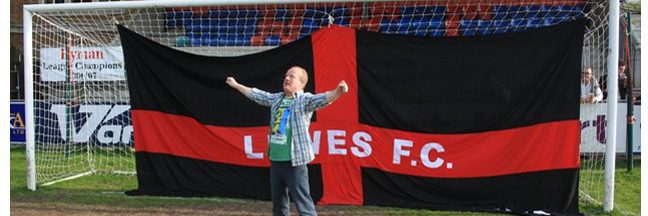
This is the story of how complacency, detachment, and poor oversight allowed a fan owned, community club like Lewes FC to be run more like a private project, with democratic values sidelined and the fan ownership corrupted, leading the club to the brink of financial collapse, and requiring urgent fiscal surgery.
Lewes FC converted to community ownership in 2010 after severe financial difficulties. The new, much hyped, ownership model was supposed to correct the past and protect the future, by ensuring financial sustainability and embedding the club deeper into its community. A group called Rooks125 helped this transformation, named in honour of the club’s 125th anniversary, and symbolising a new beginning rooted in shared ownership.
The initial composition of the Rooks125 group immediately raised red flags. It included two highly successful businessmen in finance and marketing, the head writer of the Horrible Histories TV series, Oscar-nominated Patrick Marber, and others from media backgrounds. They were undoubtedly talented, but crucially, none had experience in football, hospitality, or event management. From the outset, the leadership lacked any practical grounding in the very areas where our club most needed patching up.
The new board set out with high quality marketing and strong messaging: Lewes FC would no longer be a club of financial boom and bust. We would “do things differently.” But as a newly formed fan owned club, there was no call for arms for the towns’ businesses, inhabitants and potential volunteers to dive in and get involved like all other fan owned clubs. To use a football parlance, its all gone quiet over there.
Years later, the very directors who preached financial prudence and promising things would be better, ended up presiding over even greater losses than the previous regime, shattering the potential success of fan/community ownership, let alone running the club self sustainably like they promised.
The two businessmen on the original board generously kept the books balanced annually, leading to a hybrid benefactor led board, not a fan owned one. By the time their 12-year tenure ended, the club was financially unsustainable and culturally adrift. They did things differently, but certainly not as a properly run, community-owned football club should. The messaging was clear: we want this to succeed and be big, but the wider community of Lewes the town, was left asking, ‘what about us?’ Bigger and better things were always on the horizon as short cuts to success were sought.
Lewes, uniquely, is a town built for community ownership. Its Bonfire societies, some dating back to the mid-19th century, organise the largest Bonfire celebration in Britain, once drawing crowds of 80,000. A perfect blueprint to lean into for fan ownership. Entirely volunteer run, it’s a civic masterpiece and triumph of local entrepreneurship, community engagement, and self-sufficiency. But instead of tapping into this extraordinary resource and community experience, the board snubbed it. There was no attempt to engage with this natural support base, no meaningful effort to integrate the club into Lewes’ existing community spirit.
Sadly, “Doing things differently” meant cocking a snook at the town and therefore the potential of proper community ownership. Instead of hard graft and local partnerships, the strategy focused on big image and branding. There were famous matchday posters, a season sponsored by the band Squeeze, gimmicks, celebrity “owners.” But on the pitch, the club flatlined. Attendances only rose at the same pace as other Sussex clubs, despite the disproportionate hype. Within five years, board members were privately conceding to me that they had “lost the town.”
Meanwhile, core revenue streams were neglected. Catering was, and remains, a disaster. Local business sponsorship, once a reliable source of income, withered. The paradox was glaring: fans increasingly felt the club was more of a community club when it was privately owned.
The one sensible move the club made was to build a 3G pitch, funded by grants. But it was an epitome of the evolving club malfunction. Touted as a transformative revenue generator, it turned out to be our very own white elephant, poorly managed, maintained, and underused. While other clubs’ pitches were generating hundreds of thousands per year in rental income, Lewes FC’s pitch pulled in just £30,000 annually. The club had misjudged both the market and the operational demands of such a facility, seemingly believing with the arrogance seeping into the club, that we were bigger, better and smarter than anyone else, so everyone would want to use our facility. It summed the club up, unable to roll its sleeves up for the long haul.
With everything going swimmingly badly, the quest for what the directors called ‘smart ideas’ to reinvent the club came up trumps: Equality FC. Launched in 2017, it positioned Lewes as the first football club in the world to pay its men’s and women’s teams equally. Morally laudable and effective as a PR move, the campaign garnered enormous media attention, including club representatives appearing on the BBC’s flagship Today programme and Woman’s Hour. As the profile of the club rose, we were invited to be an inaugural member of the newly formed Women’s Championship, rubbing shoulders with Manchester United.
But the Equality FC model was fundamentally flawed. It banked on attracting major sponsorship, which never materialised. As women’s football costs rose, so too did the financial strain. By 2022, director Ed Ramsden was writing personal cheques for nearly £750,000 annually just to keep the club afloat. A governance rule limiting directors to 12 years meant Ed had to step down. When he did, his generosity went with him. By then, the annual budgets had tripled, and a bloated, inefficient club bureaucracy had emerged, draining another estimated £300,000 a year. The promise Rooks125 made of running the club sustainably became a fallacy as we sought a bailout.
Like the 3G, Equality FC fell on its face because the club failed to build things organically, slowly, utilising local volunteers. Each time, hoisted by our own petard, thinking we are so clever and better than anyone else, why follow the rules and the system? Because it works.
A failed investment bid from the Mercury 13 group in 2023/24 exposed how dependent the club had become on external help. When the women’s team was relegated from the Championship that season, the club lost both prestige and financial benefits, all while staring into a black hole of unsustainable costs. Around 20 paid staff were made redundant.
By the 2024/25 season, Lewes FC was skint. A new investment scheme was hastily announced, but in a striking display of the same governance negligence that had plagued the club for years, the board had not even consulted with the Financial Conduct Authority, with whom, as a community club, we have legal obligations, or the Football Supporters’ Association, who oversee our governance. Within weeks, the proposal had to be kicked out.
What had gone so wrong? Some members of the board passed the buck, desperately blaming the fan ownership model for the gross mismanagement at Lewes FC was a contradiction in terms — an oxymoron, even. What failed wasn’t fan ownership, but the failure to practice it. Fan ownership, when done correctly, offers real benefits: accountability, transparency, and local engagement.
It may seem pompous to compare British democracy and the electoral system with fan-owned football club elections, but in truth, they are identical in principle. Just as citizens vote to shape the direction of their government, members of Lewes FC are supposed to vote to influence and bend the club’s governing body to their collective will.
But with fan owned clubs, it only works when people take elections seriously, when the board is accountable, and when community ties are prioritised over branding exercises. Well-run clubs will get a turnout of 30–40% at club elections. The last two elections at Lewes FC saw 10% and 13% turnout respectively.
Lewes FC had become a lesson in what happens when these safeguards are ignored. For years, the same small group of people dominated decision making. Others with knowledge, skills, and passion saw no point in standing for election. Why bother, when power was so obviously concentrated and buyest? The result was a passive electorate and tokenistic voting. Elections were reduced to slogans and social agendas.
An original board member told me that from the start of fan ownership, half of the board had already taken the view to jettison proper diligent fan ownership governance for shortcuts. This showed at Lewes for the first seven years as we spluttered along, but importantly with some very good directors we kept a semblance of proper fan ownership on the agenda.
The annual board election manifestos at Lewes FC began all those years ago as earnest appeals from dedicated local fans determined to run the club responsibly. But over time, they descended into platforms for idealists from around the world as Lewes FC sought international membership, courting the ‘global community’ big idea — people who saw Lewes FC not as a football club, but as a vehicle for social change. Equality FC, noble in principle, became a gateway for international members with no connection to Lewes the town nor the club, no understanding of non-league football, and little interest beyond the ideology of the campaign.
The club turned performative. Practical, real grassroots club concerns, income generation, matchday experience, community outreach, were pushed aside. In one telling example, a 23-year-old who had never even attended a game was elected to the board, while strong local candidates with deep knowledge of the club were ignored. Our board, over a matter of a few years, changed from one chasing goals on the pitch to chasing the goals of social change under the banner of fan ownership.
Not really the general idea. Furthermore, at the same time, the Crouch Report warned of the dangers of unregulated spending and weak governance in lower league football. It called for sustainable, responsible leadership grounded in community values. Lewes FC ignored these lessons, our ill-founded self-importance trumping grounded common sense.
Fan ownership didn’t fail at Lewes FC. The people in charge failed fan ownership. They let branding replace substance, ideology replace localism, and concentrated power replace democracy. The club lost its way not because the model is flawed, but because those running it chose not to respect or protect it.
The Football Supporters’ Association did not help. Tasked with overseeing supporter run clubs, every time I raised concerns, the response was the same: if you don’t like how your club is run, boot the board out. But how can you do that when a club has been overrun, as Lewes FC was? I consider the FSA lazy and culpable in the failure of fan ownership at Lewes FC. My correspondences with them shows an organisation keen to police a constitution but unwilling to challenge dysfunction when it’s staring them in the face. To them, Lewes FC was a success, a high-profile case study. Never mind that their prodigy is now a disaster. The FSA claimed, “we have no legal jurisdiction.” But they do have a moral duty to tell the clubs they oversee, “you’re doing this wrong,” and to support people like us, through our fanzine The Right of Fans, and others, in holding the club to account.
There may yet be a happy ending. While the board was failing, a group called The Football Foundation began gaining influence. These were proper local fans, rooted in the community. They organise the many youth and veteran teams at Lewes FC, took over the 3G pitch, and started running it properly. They practise the principles of supporter ownership laid out in our constitution, long ignored by successive boards.
In the 2526 board elections, with five seats up for grabs, they swept the vote. Four of their candidates won, replacing those who saw Lewes FC as a political message board. The failing leadership was exposed. With just a 14% turnout and the usual lack of enthusiasm for elections, only committed local owners voted, and they voted for proper supporter control. Sick to death of our beloved club being treated like an experiment.
Will they succeed? It’s 50/50. The club is a mess, but if they clean it up and stick to true supporter ownership in a town like Lewes, it will come good.
#Lewes FC #Football Blog #Non League Football #Football Story #Equality FC

 The Rights of Fans.