In January 1980, The Stranglers faced what should have been a career-derailing crisis. Hugh Cornwell, frontman and principal songwriter, had been sentenced to eight weeks in Pentonville Prison after being convicted for possession of heroin and cocaine. For most bands, this would have meant cancelling the entire promotional cycle for their new record, The Raven, which had been released just a few months earlier. Instead, The Stranglers did something no other group of their stature dared attempt: they carried on with their scheduled UK tour and turned it into one of the most bizarre and unforgettable chapters in punk history.
I remember, late 80’s, the singer of my first band, The Gutter Drunks, ending up in hospital, ankle injury I seem to remember. We had a gig at te Zap Club in Brighton and we enlisted the frontman of The Crucifixion of Sean Penn to fill in. Never met him and he’d never seen us. We made a racket and he just snarled and growled along to the music, It was not great.
Luckily for the Stranglers, the other members could all sing and they had a host of famous guest singers to add a little pantomime and make a proper show of it.
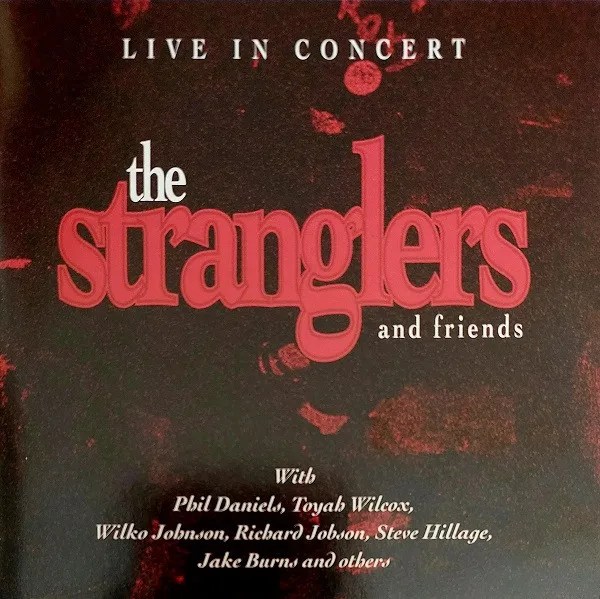
The tour became known informally as “The Stranglers and Friends.” Over eleven shows between January 15 and January 26, 1980, the band invited a shifting roster of guest singers to step in and cover Cornwell’s vocals. But despite the press coverage suggesting it was a nightly cavalcade of star frontmen, the reality was that most of the performances were carried by the band themselves. JJ Burnel, who already handled vocals on several Stranglers songs, took on an even larger share of lead duties. John Ellis, formerly of The Vibrators, was brought in to cover all of Cornwell’s guitar parts and sang some of the set as well.
The guest appearances added unpredictability and a sense of theatre to the shows. Robert Smith of The Cure, just twenty at the time, was among the most memorable contributors, lending his voice to tracks like “Grip” and “Hanging Around.” Toyah Willcox brought her vivid, expressive energy to a handful of songs, while Ian Dury fronted “No More Heroes” with his characteristic sly swagger. Hazel O’Connor also appeared during the run, giving some of the darker material a new dimension. The combination of Burnel’s growl, Ellis’s steady presence, and the guests’ unique styles meant no two nights were the same.
The tour itinerary included three nights at the Rainbow Theatre in London from January 15 to January 17, followed by shows in Hanley, Ipswich, Newcastle, Manchester, Leicester, and two nights at the Birmingham Odeon, culminating in a climactic final performance at Hammersmith Odeon on January 26. The setlists mixed the band’s established hits like “Peaches,” “Nice ‘n’ Sleazy,” “Something Better Change,” and “5 Minutes” with new material from The Raven, including “Duchess,” “Nuclear Device,” and “Don’t Bring Harry.” The fact that they were able to deliver credible versions of these songs without their charismatic frontman was testament to both their determination and their unusual resilience as a band.
The Raven itself was an ambitious album, more musically sophisticated than the raw punk of their earlier records, exploring subjects like Cold War paranoia, Norse mythology, and global espionage. The complexity of the material made it even more remarkable that the shows succeeded at all. In smaller venues like Ipswich Gaumont and Hanley’s Victoria Hall, Burnel and Ellis handled nearly all the vocals themselves, while the larger London and Birmingham dates featured the guest singers who turned each performance into a hybrid of punk gig and variety show.
Fans who attended described the experience as surreal but exhilarating. Some purists grumbled that it wasn’t really The Stranglers without Cornwell, I’d have been in that camp, while others felt the experiment added a fresh unpredictability and proved the band could withstand almost anything.
The “Stranglers and Friends” tour has since become a milestone in punk and new wave folklore. It was a reminder that while The Stranglers were famous for their aggression and controversy, they were also one of the era’s most musically disciplined and adaptable bands. This remarkable episode demonstrated their refusal to be derailed by scandal and their capacity to transform adversity into something unforgettable.
After the prison tour ended and Hugh Cornwell returned, The Stranglers carried on as their original four-piece lineup for another decade, releasing albums like La Folie and Feline and scoring the biggest hit of their career with “Golden Brown.” But the seeds of change had already been quietly planted. John Ellis’s role on the “Stranglers and Friends” tour proved he could slot into the band seamlessly, handling both guitar duties and occasional vocals under intense pressure. In many ways, those eleven nights were a testing ground, showing that The Stranglers could survive without Cornwell if they ever had to. Which they did, survive, although in my mind’s eye only About Time and Suite XV1, matched the Cornwell material.
When Cornwell finally departed the band for good in 1990, citing frustration and creative differences, it was no surprise that John Ellis was the first guitarist they turned to as a permanent replacement. He officially joined the lineup and helped shape their 1990s and early 2000s sound, appearing on albums such as Stranglers in the Night and About Time. Looking back, the 1980 tour can be seen as a precursor to this next era, It was a rehearsal for a future without their original frontman, proof that the band’s spirit of adaptability and defiance would carry them through lineup changes and decades of evolution. In hindsight, those weeks when Ellis first took the stage alongside Burnel, Black, and Greenfield marked the quiet beginning of a new chapter that would keep The Stranglers alive long after many of their contemporaries faded away.
#The Stranglers #Punk Rock #Hugh Cornwell #Punk Rock History #80s Music
The Stranglers
Punk Rock History
1980s Music
Hugh Cornwell Prison
Stranglers And Friends
John Ellis Guitarist
Robert Smith Guest
Punk Rock Tours
New Wave Music
Music History Stories

 The Rights of Fans.