
It was a completely random discovery. I was watching Daisy May and Charlie Coopers NightWatch, set in Gloucester Prison, a series where they are seeking out ghosts, and was instead blown away by the architecture.
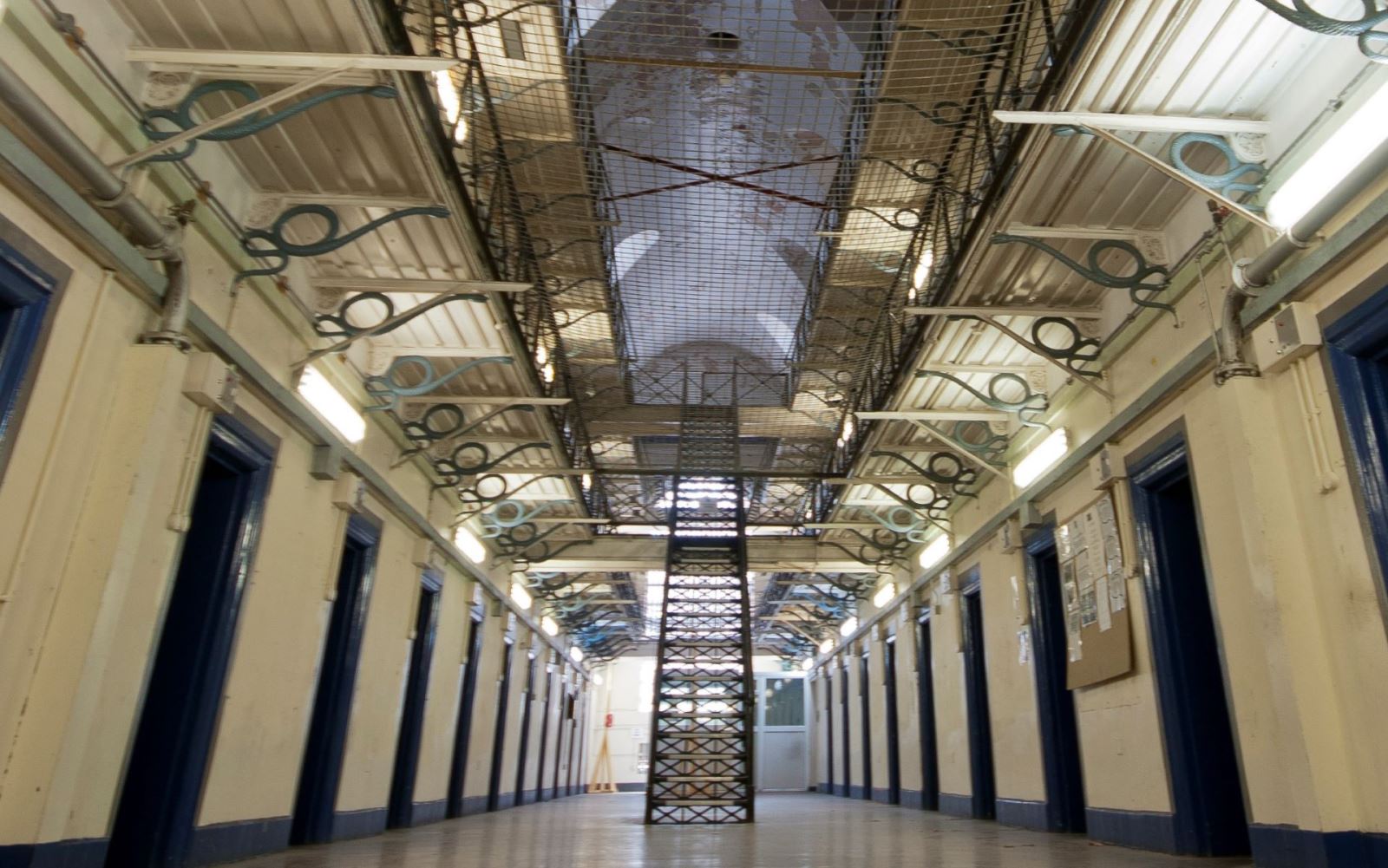
Gloucester Prison ceased to exist as a working jail in 2013, but it’s been opened to the public regularly since, and if you walk the landings you can’t miss the ironwork, the gangways are carried on cast iron brackets that are literal snakes, coiled bodies with small heads and a sense of muscle, repeated bay after bay under the edge of each walkway. Look up again and you notice something I love, the railing supports that land directly above those serpents terminate as a lion’s paw, so the lion is effectively pinning down the serpent. It’s an elegant piece of Victorian theatre in metal, representing good over evil, played out in the fabric of a prison. (Frustratingly, I don’t have a clear photo of the paw detail to show you here, so you’ll have to take my word for it.)
How They Work
Under the ornament, they’re straightforward engineering. Each bracket takes the weight of the landing, the deck itself and the people on it, and pushes that load back into the brick piers of the cell block. The snake isn’t a stuck on flourish, its body is the structure. Where the curves thicken near the wall and at the landing edge, that’s where the stresses concentrate, and the casting puts metal exactly where the force wants to run. The tails disappear into plates bolted to the masonry, the heads sit beneath the outer edge of the gangway where fixings tie into the framing above. The handrail and posts above aren’t just guardrails, tied to the deck, they stiffen the whole run so the gallery feels firm rather than springy. Walk it and you feel that: bracket, post, rail, deck, repeat, an orderly rhythm down the length of the wing. Whether or not you buy the symbolism, that lion’s paw over serpent reads in your peripheral vision as dominance and restraint, which is very much the message a Victorian prison wanted to send.
Why They Were Used
This was the age of iron galleries. Prisons needed components that could be ordered in quantity, installed quickly, and trusted. Cast iron suited that world: it excels in compression, takes a crisp pattern in sand, and once a foundry has a mould you can turn out dozens of identical parts without breaking the budget. Choosing a snake pattern didn’t change the maths, it simply meant the working bit happened to look like a creature. That’s the Victorian trick, give a hard working module a touch of crafted pride, and at Gloucester the effect is unforgettable the moment you look up, lions pinning serpents, order imposed on danger.
Most likely these were 1840s–50s cast iron pieces from a regional foundry, I have been unable to source details, a pattern maker carved a timber snake (and paw) pattern, moulds were rammed in green sand, iron from a cupola was poured, the castings were knocked out, fettled and drilled, then red-lead primed and finally bolted into the brickwork during the gallery fit out.
And even without any official brief about meaning, the psychology is there: that relentless row of snake shaped brackets, heads lurking at ankle height, bodies coiled under the gangway, works on the nerves, a quiet, ever-present cue of watchfulness and threat each time you look up, with the lion’s paw pressing down to remind you exactly who’s in charge.
#Antique Architecture #Architectural Antiques #Serpent Architecture #Cast Iron Architecture

 The Rights of Fans.