by Chris Harris
The Historical Roots of a Familiar Expression
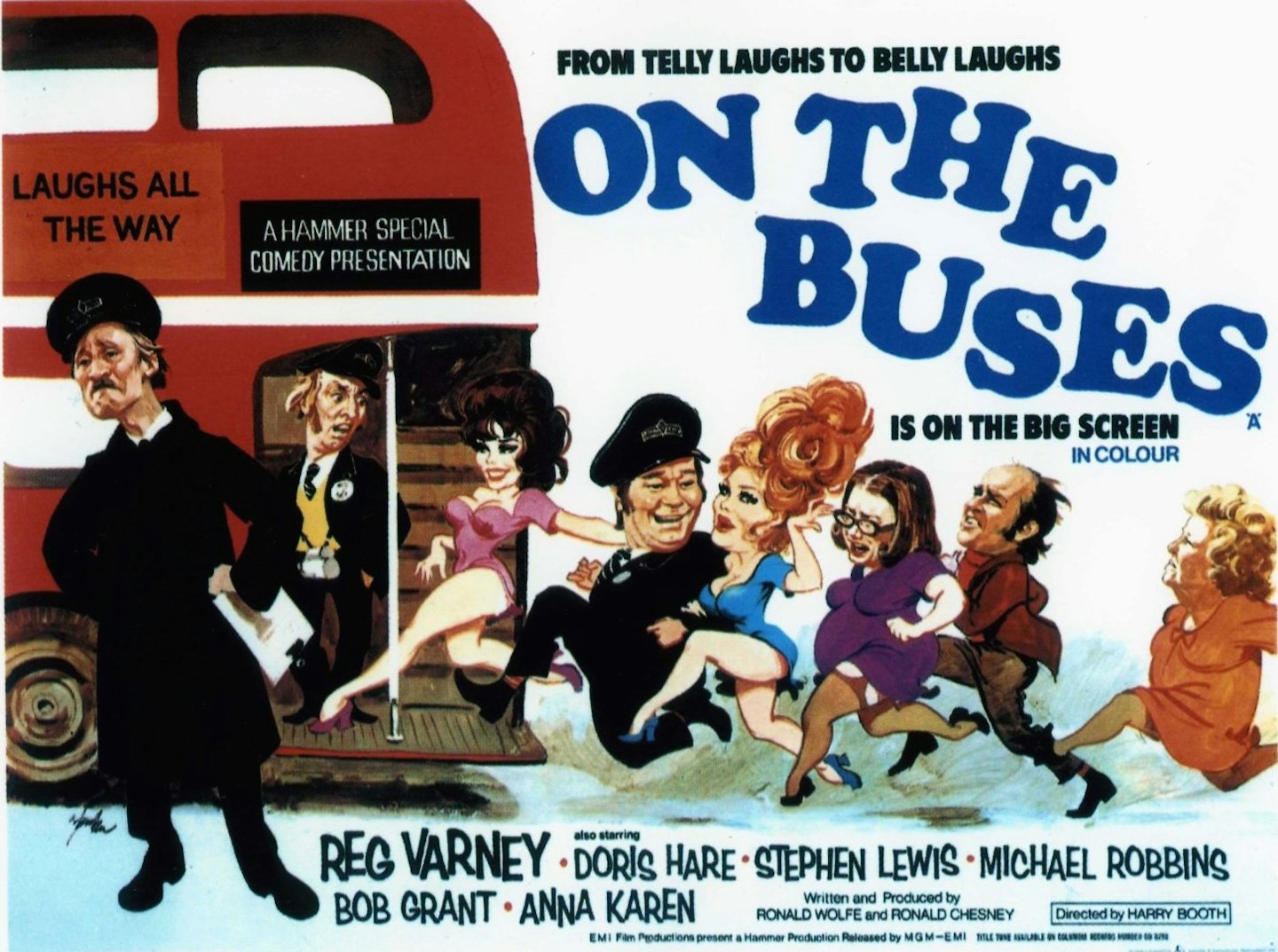
The phrase “You wait ages for a bus, and then two come at once” goes back to the lived realities of twentieth century British cities. Public transport in places like London, Manchester, Glasgow and Birmingham was notoriously irregular during the post-war decades. You may remember the sitcom ‘On The Buses.’ Mechanical faults, crowded routes, unpredictable traffic and inconsistent timetabling meant that buses rarely ran at perfectly spaced intervals. Instead, they often “bunched.” When one bus was delayed, it would accumulate more passengers at each stop, making it slower still, while the following bus, encountering fewer people, would move faster and catch up. I can feel your frustration!
The sight of two red London buses pulling into a stop together became an everyday frustration, so familiar that it naturally settled into the language of the street. By the 1960s the expression had begun appearing in newspapers, comedy scripts and local commentary, already treated as a common saying rather than a new turn of phrase. I many ways it sadly was a early sign of Britains managed decline.
How the Saying Spread Beyond the Pavement
As the reliability of British buses became a national joke, the expression drifted from literal complaint to metaphor. It offered an easy way to describe the rhythm of events in life, long periods of waiting followed by sudden abundance. Job offers, romantic prospects, pieces of news, creative ideas or even strokes of misfortune could all arrive in pairs, and the phrase captured that quirk of experience better than anything else, as well as our quaint British resignation and reputation for queuing. Its tone was modest, wry and slightly weary, which suited British conversational style perfectly. By the late twentieth century it had become a linguistic shorthand not just for coincidence but for the uneven tempo of life itself.
The Expression in Popular Culture
Writers and comedians seized on the phrase because it conveyed both humour and exasperation. It appears in British sitcoms from the 1970s onwards, often used as a punchline for characters exasperated by bad timing or domestic chaos. Newspapers and broadcasters adopted it whenever public figures, scandals or sporting feats seemed to occur in clusters. Novelists used it to signal the sudden arrival of opportunity or trouble in a protagonist’s life. In more recent decades, the expression has shown up in films, podcasts and even advertising campaigns, confirming its status as a cultural reference point that needs no explanation. What began as an observation about the imperfections of urban transport has become a universal metaphor, and a phrase that sums up nicely the frustrations of life.
#British Phrases #British Idioms #Waiting For A Bus #Popular British Culture #Popular Sayings

 The Rights of Fans.