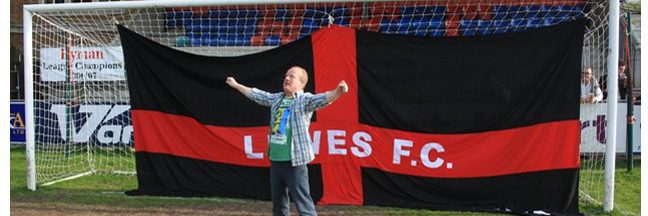
ARTICLE 1
Clubs in England run by their supporters operate under a constitution — a brilliant framework that, if followed, can lead to real success. The problem is, there’s no statutory body to enforce it. And that’s where things can get messy. Very messy.
This is the story of how complacency, detachment, and poor oversight allowed a fan owned, community club like Lewes FC to be run more like a private project, with democratic values sidelined and the fan ownership corrupted, leading the club to the brink of financial collapse, requiring urgent fiscal surgery.
Lewes FC converted to community ownership in 2010 after severe financial difficulties. The new, much hyped, ownership model was supposed to correct the past and protect the future by ensuring financial sustainability and embedding the club deeper into its community. A group called Rooks125 helped this transformation, named in honour of the club’s 125th anniversary and symbolising a new beginning rooted in shared ownership.
The initial composition of the Rooks125 group immediately raised red flags. It included two highly successful businessmen in finance and marketing, the head writer of the Horrible Histories TV series, Oscar-nominated Patrick Marber, and others from media backgrounds. They were undoubtedly talented, but crucially, none had experience in football, hospitality, or event management. From the outset, the leadership lacked any practical grounding in the very areas where our club most needed patching up.
The new board set out with high quality marketing and strong messaging: Lewes FC would no longer be a club of financial boom and bust. We would “do things differently.” Where was the call for arms for the towns businesses, inhabitants and potential volunteers to dive in and get involved like all other fan owned clubs. To use a football parlance, its all gone quiet over there.
Yet the very directors who preached financial prudence ended up presiding over even greater losses than the previous regime, shattering any semblance at Lewes FC to fan/community ownership, let alone run self sustainably like they promised.
The two businessmen on the original board generously kept the books balanced annually, leading to a hybrid benefactor led board, not a fan owned one. By the time their 12-year tenure ended, the club was financially unsustainable and culturally adrift. They did things differently, but certainly not as a properly run, community-owned football club should. The messaging was clear: we want this to succeed and be big, but the wider community of Lewes the club is entrenched in was left asking, ‘what about us?’ Big and better things were always on the horizon as short cuts to success were sought.
Lewes, uniquely, is a town built for community ownership. Its Bonfire societies, some dating back to the mid-19th century, organise the largest Bonfire celebration in Britain, once drawing crowds of 80,000. A perfect blueprint to lean into for fan ownership. Entirely volunteer run, it’s a civic masterpiece and triumph of local entrepreneurship, community engagement, and self-sufficiency. But instead of tapping into this extraordinary resource, the board snubbed it. There was no attempt to engage with this natural support base, no meaningful effort to integrate the club into Lewes’ existing community spirit.
Sadly, “Doing things differently” meant cocking a snook at the town and therefore proper community ownership. Instead of hard graft and local partnerships, the strategy focused on image and branding. There were famous matchday posters, a season sponsored by the band Squeeze, gimmicks, celebrity “owners.” But on the pitch, the club flatlined. Attendances only rose at the same pace as other Sussex clubs, despite the disproportionate hype. Within five years, board members were privately conceding to me that they had “lost the town.”
Meanwhile, core revenue streams were neglected. Catering was and remains a disaster. Local business sponsorship, once a reliable source of income, withered. The paradox was glaring: fans increasingly felt the club was more of a community club when it was privately owned.
The one sensible move the club made was to build a 3G pitch, funded by grants. But it was an epitome of the evolving club malfunction. Touted as a transformative revenue generator, it turned out to be our very own white elephant, poorly managed, maintained, and underused. While other clubs’ pitches were generating hundreds of thousands per year in rental income, Lewes FC’s pitch pulled in just £30,000 annually. The club had misjudged both the market and the operational demands of such a facility, seemingly believing, with the arrogance seeping into the club, that we were bigger, better and smarter than anyone else, so everyone would want to use our facility. It summed the club up, unable to roll it’s sleeves up for the long haul.
With everything going swimmingly badly, the quest for what the directors called ‘smart ideas’ to reinvent the club came up trumps: Equality FC. Launched in 2017, it positioned Lewes as the first football club in the world to pay its men’s and women’s teams equally. Morally laudable and effective as a PR move, the campaign garnered enormous media attention, including club representatives appearing on the BBC’s flagship Today programme and Woman’s Hour. As the profile of the club rose, we were invited to be an inaugural member of the newly formed Women’s Championship, rubbing shoulders with Manchester United.
But the Equality FC model was fundamentally flawed. It banked on attracting major sponsorship, which never materialised. As women’s football costs rose, so too did the financial strain. By 2022, director Ed Ramsden was writing personal cheques for nearly £750,000 annually just to keep the club afloat. A governance rule limiting directors to 12 years meant Ed had to step down. When he did, his generosity went with him. By then, the annual budgets had tripled, and a bloated, inefficient club bureaucracy had emerged, draining another estimated £300,000 a year. The promise Rooks125 made of running the club sustainably became a fallacy as we sought a bailout.
Like the 3G, Equality FC fell on its face because the club failed to build things organically, slowly, utilising local volunteers. Each time, hoisted by our own petard, thinking we are so clever and better than anyone else, why follow the rules and the system? Because it works.
A failed investment bid from the Mercury 13 group in 2023/24 exposed how dependent the club had become on external help. When the women’s team was relegated from the Championship that season, the club lost both prestige and financial benefits, all while staring into a black hole of unsustainable costs.
By the 2024/25 season, Lewes FC is skint. A new investment scheme was hastily announced, but in a striking display of the same governance negligence that had plagued the club for years, the board had not even consulted with the Financial Conduct Authority, with whom, as a community club, we have legal obligations, or the Football Supporters’ Association, who oversee our governance. Within weeks, the proposal had to be kicked out.
What had gone so wrong? Some members of the board passed the buck, but desperately blaming the fan ownership model, as some did, for the gross mismanagement at Lewes FC was a contradiction in terms — an oxymoron, even. What failed wasn’t fan ownership, but the failure to practice it. Fan ownership, when done correctly, offers real benefits: accountability, transparency, and local engagement.
It may seem pompous to compare British democracy and the electoral system with fan-owned football club elections, but in truth, they are identical in principle. Just as citizens vote to shape the direction of their government, members of Lewes FC are supposed to vote to influence and bend the club’s governing body to their collective will.
But with fan owned clubs, it only works when people take elections seriously, when the board is accountable, and when community ties are prioritised over branding exercises.
Well-run clubs will get a turnout of 30–40%. The last two elections saw 10% and 13% at Lewes FC.
Lewes FC had become a lesson in what happens when these safeguards are ignored. For years, the same small group dominated decision making. Others with knowledge, skills, and passion saw no point in standing for election. Why bother, when power was so obviously concentrated? The result was a passive electorate and tokenistic voting. Elections were reduced to slogans and social agendas.
An original board member told me that from the start of fan ownership, half of the board had already taken the view to jettison proper diligent fan ownership governance for shortcuts. This showed at Lewes for the first seven years as we spluttered along , but importantly with some very good directors we kept a semblance of proper fan ownership on the agenda.
The annual board election manifestos at Lewes FC began as earnest appeals from dedicated local fans determined to run the club responsibly. But over time, they descended into platforms for idealists from around the world as Lewes FC sought international membership courting the ‘global community’— people who saw Lewes FC not as a football club, but as a vehicle for social change. Equality FC, noble in principle, became a gateway for international members with no connection to Lewes, no understanding of non-league football, and little interest beyond the ideology of the campaign.
The club turned performative. Practical, real world concerns, income generation, matchday experience, community outreach, were pushed aside. In one telling example, a 23-year-old who had never attended a game was elected to the board, while strong local candidates with deep knowledge of the club were ignored. Our board, over a matter of a few years, changed from one chasing goals on the pitch to chasing the goals of social change.
Not really the general idea. Furthermore, at the same time, the Crouch Report warned of the dangers of unregulated spending and weak governance in lower league football. It called for sustainable, responsible leadership grounded in community values. Lewes FC ignored these lessons, our ill-founded self-importance trumping grounded common sense.
Fan ownership didn’t fail at Lewes FC. The people in charge failed fan ownership. They let branding replace substance, ideology replace localism, and concentrated power replace democracy. The club lost its way not because the model is flawed, but because those running it chose not to respect or protect it.
The Football Supporters’ Association did not help. Tasked with overseeing supporter run clubs, every time I raised concerns, the response was the same: if you don’t like how your club is run, boot the board out. But how can you do that when a club has been overrun, as Lewes FC was? I consider the FSA lazy and culpable in the failure of fan ownership at Lewes. My correspondences with them shows an organisation keen to police a constitution but unwilling to challenge dysfunction when it’s staring them in the face. To them, Lewes FC was a success, a high-profile case study. Never mind that their prodigy is now a disaster. The FSA claimed, “we have no legal jurisdiction.” But they do have a moral duty to tell the clubs they oversee, “you’re doing this wrong,” and to support people like us, through our fanzine The Right of Fans, in holding them to account.
There may yet be a happy ending. While the board was failing, a group called The Football Foundation began gaining influence. These were proper local fans, rooted in the community. They organised the many youth and veteran teams, took over the 3G pitch, and started running it properly. They practise the principles of supporter ownership laid out in our constitution, long ignored by successive boards.
In the 24/25 board elections, with five seats up for grabs, they swept the vote. Four of their candidates won, replacing those who saw Lewes FC as a political message board. The failing leadership was exposed. With just a 14% turnout and the usual lack of enthusiasm for elections, only committed local owners voted, and they voted for proper supporter control. Sick to death of our beloved club being treated like an experiment.
Will they succeed? It’s 50/50. The club is a mess. But if they clean it up and stick to true supporter ownership in a town like Lewes, it will come good.
AERTICLE 2
Steve King led Lewes FC to promotion to the Conference National (now known as the National League) in the 2007–08 season. Under his management, the club won the Conference South title that year, marking our first and only promotion to the top tier of non-league football. In no time we had been bankrolled from Ryman 3 to the top flight of non league football under the astute financing and ownership of Martin Elliott, a local property developer. For five years, it had been success after success, including the redevelopment of our beautiful ground, The Dripping Pan, thanks entirely to Elliott and dare one say, private financing, often regarded as the best non league stadium in the UK. As the story below unravels, one has to consider when observing fan ownership, the benefits and pitfalls of private ownership.
King was controversially dismissed shortly after securing promotion, literally the day after. The club’s directors cited concerns over sustainability and the financial demands of competing at a higher level, stating that King had not been instructed to achieve promotion and that his success had created unforeseen challenges for the club. ‘The Manager Sacked For Being Too Successful’ ran the Guardian as a director ridiculously claimed they had never asked him to get the club promoted. Heavily bankrolling him would suggest otherwise. In reality, the financial crash hit, and the bankrolling was removed, and some felt faces needed saving. In reality when everyone pinched themselves at our success, at a club where there is no self-entitlement or expectation, excuses were not needed when the inevitable going tits up arrives.
The comedy season had begun and continued until April 2025.
The club was in financial peril, but Elliott successfully guided it through a tough few years of austerity, keeping us in the old Conference South on a shoestring budget. Despite offers from other private enterprises to take over the club, he eventually ceded control to fan ownership rather than irresponsibly taking the easiest option for a quick buck. Martin Elliott was the club’s greatest owner.
During this interim period, some of us had set up the Lewes FC Supporters Trust. I was on the original steering committee. I left and started the club fanzine, still going strong nearly 20 years later. My partner at the time was the treasurer, so I helped out still. Frankly, had the club gone bust and inevitably been forced down the leagues to county football, the original Supporters Trust could have run the club fine at a lower level.
Not long after the official launch of the Supporters Trust, touchingly attended by Martin Elliott, a buzz went around the town as a new takeover was announced by a fan group who the original Supporters Trust ceded control of the fan ownership model, constitution and essentially the Supporters Trust to. It was a group of rank amateurs handing over to some credible professionals.
A group called Rooks125 facilitated this transformation, named in honour of the club’s 125th anniversary and symbolising a new beginning rooted in shared ownership.
The initial composition of the Rooks125 group immediately raised red flags. It included two highly successful businessmen in finance and marketing, the head writer of the Horrible Histories TV series, Oscar-nominated Patrick Marber, and others from media backgrounds. They were undoubtedly talented, but crucially, none had experience in football, hospitality, or event management. From the outset, the leadership lacked any practical grounding in the areas where our club needed patching up and where fan ownership and involvement could thrive.
What was surprising was the chairperson of the original Supporters Trust Ruth O’Keefe, recognised at the time as the most influential woman in Lewes, and Steve Watts, who she preceded and who had just single-handedly put on a small fundraising festival, were completely left out of the picture. Boards of fan-owned clubs are allowed to co-opt unelected directors, but when they set up Rooks125 with a questionable mix of new faces, why were hardcore Lewes FC and Lewes people ignored?
As time evolved, what became apparent was that this was less of an oversight and more a new board determined to do it their way and not necessarily the fan-owned way. Ruth O’Keefe was a firebrand, and it would be arrant nonsense to challenge a mode of thinking that fan ownership would not have thrived with her involved.
The rules laid out in the Lewes Community Football Club constitution couldn’t be easier to understand. The club’s objects are to act as responsible custodians for future generations, operating democratically, fairly, and transparently, while ensuring financial responsibility in the community’s long term interests. Written within the constitution is basically a brilliant and simple guide to creating a model fan owned club, if the rules and spirit are followed correctly. In these three articles about Lewes Football Club you will read very little about the virtues necessary for successful fan ownership!
It was an exciting time. Fan ownership was a perfect fit for Lewes.
Lewes, uniquely, is a town built for community ownership. It’s Bonfire societies, some dating back to the mid-19th century, organise the largest Bonfire celebration in Britain, once drawing crowds of 80,000. A perfect blueprint to lean into for fan ownership. Entirely volunteer run, it’s a civic masterpiece and triumph of local entrepreneurship, community engagement, and self-sufficiency. All Lewes FC had to do was tap into this perfect blueprint and resource for proven success.
However, as the new ownership model unravelled it soon became clear that things were not panning out as hoped.
Far from reaching out to embrace the extraordinary human and financial resources right on its doorstep, Lewes FC turned inward. Lewes is a wealthy, highly skilled town—but instead of genuine invitations to roll up our sleeves and help build the brilliant community club we all believed in with the board, we got soundbites and marketing claptrap. Hollow slogans like “We like to do things differently” and the quest for “Smart ideas” rather than ownership involvement, came to define the club’s direction, superficial branding that replaced the real values and spirit of community ownership the club was founded on.
It’s fair to divide the fan-owned era of Lewes FC into two distinct phases: 2010–2017 and 2017–2025, for reasons that will soon become clear.
In a later conversation with one of the inaugural members of the Rooks125, he revealed something crucial: from the very beginning, the board was divided into two camps, those genuinely committed to the principles enshrined in the club’s constitution, and those more inclined to sidestep them. This raises the obvious question: Why did half of the original six get involved in the first place? What were they thinking? Was it always a cynical move, to use the fan-ownership model as a cosy branding platform while quietly adopting strategies completely at odds with the ethos of fan ownership to build the club? I asked the question in Part 1, why were obvious people at the club from the original Supporters Trust, people entrenched with the town and club, simply brushed aside, not invited onto the original Rooks125 or later co-opted onto the board, maybe this is actually the answer.
At The Right of Fans, we criticised the board heavily. This internal dysfunction led to stagnation, on and off the pitch. It was the first major flaw exposed in the fan ownership model at Lewes: there was, and still is, no regulatory body. No mechanism existed to intervene when the board deviated from the constitution or the founding principles of community ownership. No one stepped in to say: “You may prefer a different path Lewes FC directors, but you can’t just rewrite the rules of fan ownership as you go, so get back on track.”
Fan-owned clubs are overseen by the Football Supporters Association, which serves in an advisory capacity and has no power to enforce censure. The Financial Conduct Authority holds legal responsibility for financial matters and governance structures, but it does not oversee the day-to-day operations or general direction of the club. At the moment fan ownership is just a DIY model, reliant on the goodwill of those in charge. Very much in short supply at Lewes.
On the face of it, things were happening. The new pathway was rubber stamped, the publicity machine whirred into action, and the club began its shift from a fledgling community institution to a branded commodity. It became increasingly clear to me that branding was being pursued as a shortcut to generate revenue, the beginning of chasing sponsorships and external investment, rather than building something authentic and enduring.
The club’s image as a ‘new, shiny football club’ took precedence over the slower, more grounded process of growth through members, volunteers, and the town’s own resources. Essentially building a backbone rather than yet another flimsy business model. The Gordon Brown ‘no return to boom or bust,’ was rolled out as a poignant warning from the new board, as they set the club up to do the opposite of what they claimed on the tin.
This approach was paradoxical. The board repeatedly insisted that their goal was to create a self-sustaining club, yet their chosen methodology, reliant on external capital, top-down strategies, and branding exercises, was inherently unsustainable. It replaced resilience with dependency and eroded the grassroots foundation that gives community clubs their strength.
A truly fan-owned club should never spend beyond the collective means of its community, the sum of its parts. That is what self-sustainability looks like. Anything else is simply borrowing against the future.
However, with a highly skilled and talented former marketing leader on the board, his abilities were put to good use as the profile of Lewes FC rose. Matchday posters gained national acclaim, famous board members were courted, Nigella Lawson became an owner, and ‘beach huts’ were built as quirky de facto executive boxes. All religiously reported by friends in the national press as the profile of the club grew.
One development during this period should have been a major success, and ultimately summed up the deeper failings of the club: the construction of a 3G pitch. Across the country, small football clubs have been building these all-weather surfaces, which, when properly managed, can generate between £100,000 and £300,000 annually. Worthing, just down the road, is a prime example of how a well-run 3G pitch can transform a club’s fortunes.
Initially, there was plenty of noise and PR surrounding the Lewes FC project. But once the fanfare faded, the reality set in: the venture was a commercial flop. The facilities were poorly thought out, no adjoining changing rooms, only portaloos and the pricing structure rendered it overpriced and underused. By 2025, it remained a glaring missed opportunity. Club accounts showed it brought in just £30,000 per year, with annual maintenance costs of £20,000 a derisory profit in the bigger picture. This failure became emblematic of Lewes FC under that regime: good ideas, poorly executed, and quickly abandoned once the hard work began.
At community-owned clubs, the accounts must be published annually. What became clear was that, despite the relatively low running costs of a club like Lewes, we were losing money every year, often around £100,000. However, the balance sheet always looked healthy because two directors with deep pockets routinely covered the shortfall. This was a generous gesture.
But as former director Lee Cobb observed, it created a perverse situation: a two-tier board, where the “haves” effectively called the shots, and the “have-nots” put in the work and had to try and influence policy. One benefactor, Ed Ramsden, admitted to the fanzine he put in the least effort and hours into the running of the club of all directors at the time.
Directors are allowed to serve up to four terms of three years each. Both of the directors who routinely donated to cover trading losses served the full twelve years. We shouldn’t be too harsh, boards are democratic structures, and during the first seven years, there was only one resignation over internal disagreements. If others on the board had wanted greater influence, they could and should have pushed for it. Credit, too, to all those early board members who were well intentioned and worked selflessly to keep the club going. The two benefactors always stated that they would never leave the club in the lurch so there was really no reason for other board members not to push the agenda of proper fan ownership. And with a blank annual cheque, there no urgent requirement to run the club economically and build the numerous income streams available, the club could simply coast.
I should pause here to acknowledge something important. Many of the earlier directors at Lewes FC, particularly in the early years of fan ownership, were either retired or semi-retired individuals who dedicated upwards of 40 hours a week to the club. That level of commitment was extraordinary. I know I’m often criticised these days for being overly harsh on some of our more recent directors, but credit where it’s due: those early volunteers rolled up their sleeves and put in the graft.
I’m not someone who hands out praise easily, especially when it isn’t earned. But in those formative years, the club benefited from people who gave their time selflessly and worked incredibly hard behind the scenes. It’s important to separate that era from what came next.
As the club’s profile grew, those grounded, hard-working directors were gradually replaced by what I can only describe, in traditional football parlance, as Fancy Dans, people more interested in the appearance of leadership than the hard work it demands. They played the part, but they didn’t get stuck in. That shift marked a turning point in the culture and direction of Lewes FC, and it’s one of the reasons we find ourselves in the mess we’re in today.
About five years in, I met with several directors individually, and they all admitted the club had already “lost the town” a damning indictment of community and fan ownership. Local membership was embarrassingly low, and sponsorship from local businesses was almost non-existent. I felt an almost desperate acknowledgement of abandonment in some of them.
But at the same time, the pillars of fan ownership continued to collapse. At the fanzine, we increasingly found ourselves as the main force holding the club to account. When I asked one director why he had failed to deliver on the pledges in his election manifesto, I was stunned by the response: directors could no longer be held individually accountable, and all queries now had to be directed solely to the Chairman, Stuart Fuller.
This was a staggering betrayal of the principles of fan ownership, an ownership model supposedly built on openness, accountability, and direct engagement with supporters. Instead, it had morphed into something opaque and hierarchical, more akin to a corporate boardroom than a community club.
In fairness to Stuart Fuller, he was always excellent and prompt in responding to queries. Even when he knew the information would be used critically, he still provided it, because throughout his 12 years on the board, Stuart acknowledged the importance of discussion and transparency.
Sadly, when Stuart’s tenure ended a couple of years ago, so too did the last remaining bastion of anything credible about Lewes FC’s version of fan ownership. In his place came a poor chairman, Trevor Wells, under whom the already eroding principles of transparency and accountability all but collapsed.
Fan-owned clubs are permitted to co-opt non-voting directors with specific skill sets to strengthen board performance. I once asked the Lewes board why they hadn’t done this. The answer? They believed the existing board had all the necessary expertise. Yet there was nobody on the board experienced in catering, hospitality, or event management, the bedrock and foundations of non league football clubs. It cemented a feeling that for a fan or owner to help change the club was impossible, the walls of involvement were impenetrable.
Board elections are held annually to encourage fresh thinking and leadership renewal. At Lewes FC, however, these have long been treated as little more than a tick-box exercise. In theory, they’re the lifeblood of the club, a chance for owners to steer the direction of travel. But few prospective board members bothered to stand, as the board was now widely seen as a closed shop: “our way or no way.”
This is one of the biggest structural failings of fan ownership. Directors should never be allowed to serve more than one or two terms. Otherwise, clubs like Lewes become entrenched in a single mindset. All fan-owned clubs should implement rigorous election processes and actively promote meaningful member engagement. The last two board elections at Lewes saw turnout rates of just 10% and 14%.
And where did it all lead? At the end of this first era of fan ownership, we were a football club that had dropped two divisions, from National Conference South to the Isthmian First Division.
ARTICLE 3
Meanwhile, the women’s team quietly kept going, punching above their weight, maintaining their place in the third tier of the national league structure. Change, however, was on the horizon.
At the 2016/17 board elections, benefactors Charlie Dobbs and Ed Ramsden were required to stand again for a third term. It was during this election that they presented a new essentially dual manifesto and business plan under the banner of Equality FC.
At its core, the initiative promised budget parity between the men’s and women’s teams. Lewes FC became, we believe, the first football club in the world to pay its men and women equally. There was cynicism at the outset, an article in The Guardian announcing the move drew a hundred comments, unprecedented for non-league coverage, most proclaiming it a gimmick. And to me, it was a gimmick, an effective and clever one, but one that in fairness matured into a genuine campaign of merit as serious figures joined the cause.
The original plan was simple: Equality FC would run for three years. If, by then, the club hadn’t raised sufficient external income, through sponsorships and other support, to make the initiative self-sustaining, it would be abandoned. The genius of the plan was that it thrust Lewes FC into the spotlight. Suddenly, we were one of the most talked about non league clubs in the country.
At the time, the men’s team operated on a budget of around £100,000. So, in principle, achieving parity for the women’s team would require Charlie and Ed to inject maybe an additional £100,000 annually. While it’s not my place to speculate on their personal wealth, it is relevant to note that, for several years prior, they had already been contributing around £100,000 each year just to keep the club afloat. In that context, the extra financial commitment may not have been an insurmountable burden. And given that Ed would eventually donate £700,000 a year, it’s fair to suggest that Equality FC was not solely a socially driven gesture, it was also a strategic move to attract sponsorship and external funding through a bold, values led brand.
But it begged the question: how was this bold new venture compatible with fan ownership? The stated aim had always been to become self-sustainable, either by reducing costs or increasing revenue. Yet this strategy was only going to dramatically increase expenditure. Yes, if the hoped-for sponsorship materialised, it could potentially propel the club toward genuine sustainability for the first time. But that was a big “if.” And the whole principle of fan ownership is that you don’t gamble. You build slowly, methodically, and organically. You don’t take shortcuts. You don’t stake the future of the club on speculative investment or glossy branding. You work with what you’ve got, and in Lewes, what we had was already extraordinary, had anyone even bothered to build properly upon it?
We got the publicity. But the cash never followed. Although Equality FC generated great coverage from the BBC, The Guardian, and others, outside interest was limited. Not particularly the fault of Lewes FC, women’s football simply had very low visibility at the time. That’s why the FA intervened and restructured the women’s pyramid, creating the Women’s Premier League and Championship, hoping to create a juggernaut to raise the game’s profile. Perversely with all the noise about Equality FC around the club, any remaining intent to push a fan ownership agenda virtually disappeared.
The club received a massive boost, one that fatally blew the idea that if the project wasn’t self sustainable within three years it would be pulled.
Rather spectacularly, The Lewes FC Women were invited into the newly formed FA Women’s Championship, placing the women’s team among the top 24 in the country. Curious as to why more prominent clubs had been overlooked, I contacted the FA’s Head of Women’s Football, who told me candidly: it was because of Equality FC.
A s we moved further and further away from a grassroots football club for the town of Lewes director Barry Collins resigned, citing, “I joined a football club and feel like I’m leaving a political party,” indicating discomfort with the club’s shift towards activism at the expense of its sporting focus.
I got slammed at the time as I repeatedly said that joining the FA Women’s Championship was totally unaffordable and received heavy criticism from pretty much everyone at the club for deigning to raise concerns. It wasn’t that I was some great business guru, it was common sense that a small club would get swallowed up. Eventually I was proven right.
It was always a distasteful tactic, weaponised against me by the leadership and some of their cronies, announcing unworkable ideals, slagging me off when I deigned to criticise them, knowing full well it would be a few years before the ideas can be judged by results. Easy to slag off what can’t be proved for a few years.
I also argued that Lewes FC, who had played an influential role in the development of the women’s game, should be championing the creation of a women’s sport that didn’t simply mirror the men’s structure. At the time, women’s football was still in its embryonic stages, and blindly copying what is essentially the best league system in the world, which I always claime was short sighted.
Instead, I suggested a more innovative approach, akin to cricket’s newly launched The Hundred, which introduced fresh teams and a new format, and was hugely successful. But again, I faced enormous pushback from the club. I was told that, as money flooded into the women’s game, it would eventually trickle down into Lewes FC’s coffers.
It never did.
And to the club’s credit, when the party was over and reality hit, they finally acknowledged that their original assumptions, following the status quo, had been fundamentally flawed.
Despite the huge additional costs, Lewes FC Women held their own for several seasons in the Championship, regularly finishing mid-table. facing giants like Manchester United. Attendances steadily grew, and, relative to the town’s population, Lewes became the best-supported women’s club in the UK. But beneath this success, it became increasingly clear that the club’s narrative had shifted entirely. The original ideals of fan ownership had faded into the background, overtaken by the branding of Equality FC, which now defined the club’s identity. The founding principles had drifted into irrelevance.
The club’s expensive marketing looked to have been successful as attendances rocketed and the club branding suggested a club on the up.
It all looked so rosy, until you read the accounts. By now Ed Ramsden was bankrolling the club to the tune of £700,000 per year, an astronomical sum for a relatively small football club. Sponsorship simply did not arrive as expected. The board had assumed that exposure from the Women’s Championship would lead to an influx of sponsorship money. But although TV money and league revenue were welcome, they didn’t come close to covering the enormous cost of competing at that level.
In a sense, we became hoisted by our own petard, as the costs of players’ wages rose. To meet the costs of being competitive within the Women’s Championship, with equal playing budgets, the men’s team had to have a dramatically increased playing budget to achieve parity.
Another huge budget came into the picture. With delusions of grandeur, it was decided in order to facilitate the growth of the club, and realise the potential income from sponsorship, Lewes FC would need a large bureaucratic team to deal with, administrate and market the growth of the club.
As Lewes FC professionalised, a bloated bank of bureaucratic staff was hired to take on roles that could, and should, have been filled by skilled local volunteers. With this shift came an unhealthy culture of secrecy. While the club loudly extolled the virtues of fan ownership in its public messaging, the reality was very different: owners were kept in the dark. There were no meaningful updates, no transparency, just a stream of polished platitudes.
In stark contrast stands FC United of Manchester, a club that remains a beacon of how proper fan ownership should operate. Transparency is at the heart of their model. Just this week, I received an email outlining their latest board meeting. A few days later, a comprehensive 12-page set of minutes was released, detailing everything discussed and agreed upon. Members can even dial in and watch the meetings live. That’s what genuine accountability looks like.
At Lewes, however, fan engagement is largely symbolic. A full time Fan Engagement Officer was appointed, and remains in post, but the results speak for themselves. At the most recent board election hustings, only 1% of owners bothered to tune in. When the club held an emergency meeting to discuss a bailout plan, we calculated just 12 out of 2,700 members participated. The disconnect could not be clearer. A dictionary definition of broken and dysfunctional, we can all agree.
FC United’s website, geared toward fundraising and supporter involvement, is superb, practical, clear, and community-driven. In contrast, the Lewes FC website offers a distasteful barrage of self-congratulatory messaging and superficial publicity grabs, more anchored in narcissism than meaningful engagement or effective fundraising.
As FC United proudly states:
“One of the benefits of being a co-owner of FC United is that you can keep up to date with the decisions taken and issues discussed by the club’s elected board members within a few working days of each monthly board meeting taking place. It’s a level of transparency that very few football supporters around the world enjoy.”
And some. At Lewes, nothing remotely close to this exists. Board meetings and operational decisions are conducted like a clandestine operation. And this secrecy matters deeply. When owners are actively involved in the workings of the club, when they understand how it operates and why decisions are made, they are far more likely to care, contribute, and integrate themselves into the club’s machinery.
That’s how fan ownership should work. At Lewes, it simply didn’t.
Because the board of our fan owned club had by now forgotten we were a fan owned club, how convenient eh?
Instead, the plan was to turn Lewes FC into a global football brand. Members were bombarded with lofty strategies and more corporate claptrap that bore no resemblance to football, or to Lewes, as the club tried to exponentially grow its international membership.
The final nail to fan ownership as decreed in our constitution came when the CEO and board openly declared that Lewes FC was no longer a community club for Lewes, but a community club for the international community. It was the ultimate cop out, an unashamedly opportunistic rebranding of Lewes Community Football Club into something abstract and borderless, designed to justify chasing global cash and prestige. In doing so, they severed the club’s deep local roots. It became the footballing equivalent of Orwell’s Animal Farm, where all fans were equal, until the pigs took over and declared themselves more equal than others.
Before the Equality FC campaign, we had a healthy membership of around 1,000, built organically through local engagement and genuine interest in the club. Despite throwing enormous resources at creating an international fanbase, that number only increased by around 1,700. The club had hoped to get five times that number. A global brand this was not. Heaven knows what the cost per head was in terms of sourcing the 1700, but it certainly exceeded the £85,000 a year generated from membership subs. The shine began to wear off, and fast.
New catchphrases emerged as the anticipated wave of sponsors failed to appear. “We’re still talking to potential investors,” the club would say, but those conversations rarely led anywhere. The great Lewes FC Equality FC project was floundering, not because of a lack of effort, but due to a simple lack of interest and poor inexperiences management by the board and the vast array of administrative staff.
Ironically, despite having driven a stake through the heart of meaningful fan ownership, Lewes FC remained, on paper, a fan-owned club. Importantly, this in itself became a commercial obstacle. Potential sponsors were reluctant to invest significant sums in a club where they would have no say in how things were run. Meanwhile, although women’s football was rightly gaining prominence on the international stage, the domestic leagues remained sparsely attended and lacked mainstream visibility. These clubs weren’t delivering brand impact at scale, certainly not fast enough to justify major sponsorship deals. Lewes FC, chasing big investment under the Equality FC banner, found itself stuck. And all the while, the club was racking up unsustainable operating losses year after year.
Time was running out.
After 12 years on the board, Ramsden stepped down, indicating he was no longer willing to underwrite the club’s finances. Fair enough, he had invested significantly. But the grand international membership vision had failed. The membership drive fizzled out. The money dried up. The dream began to collapse.
In desperation, the club tried to cobble together a deal with Mercury 13, a US based women’s football investment firm. That decision marked the beginning of the end of the Equality FC global brand, it was also where the town began to fight back.
As the years went by, the hard-working, locally rooted directors who had helped shape Lewes FC gradually left the board. In their place came a new breed of directors, individuals who, frankly, had no business being anywhere near a fan-owned football club. At Lewes, anyone can stand for the board if they’re a member, and with the arrival of 1,700 new international members, many drawn in by the Equality FC campaign, came a wave of candidates who had no real connection to Lewes, to the club, or to the principles of fan ownership.
There was nothing wrong with members from abroad wanted to stand for the board on the basis of promoting Equality FC, they had signed up on the basis of Equality FC and not fan ownership. The fault lay with the incompetent lack of strategic vision from the directors.
Their focus wasn’t on the town, the team, or non-league football. They were interested in pushing a socially driven agenda aligned with Equality FC, which bore little resemblance to the founding ideals of a community run club. Many of them had never even been to a match, yet were regularly voted onto the board by a like minded membership who also had little real world connection to the club.
The board’s decisions had left the club trapped in a confused and unsustainable model, marked by a mixed identity, conflicting aims, and a fragmented membership. It was no longer clear who the club was for, what it stood for, or how it planned to survive.
At one point, we even had a 23-year-old elected board member whose primary qualification was having written a dissertation on women’s football. Even more bizarrely, from the point of view of Lewes Community FC some directors had literally never set foot in the Dripping Pan. Can you believe that? And worse, no one at the club seemed to raise an eyebrow.
Even the most loyal supporters of the club’s leadership would quietly admit that too many directors were using the role to augment their CV, something aspirational, a way to burnish their progressive credentials. We had reached a low point. Reading the manifestos of prospective directors felt like reading fairy tales, idealistic nonsense from people utterly unaware that the club was in financial trouble. They praised how “well-run” it was, despite all evidence to the contrary. Never mentioned the town, of course, well they wouldn’t, the club had rammed Equality FC down their throats.
The sad thing is, Equality FC could have become a landmark initiative, still potentially could, an internationally overseen project embedded within a thriving fan owned structure. Done properly, Lewes could have been the best and most successful fan owned football club in the world. All the ingredients were there. But the fatal flaw was that the board had failed, well before launching Equality FC, to establish a properly functioning fan-owned club in the first place. There was no solid foundation, no effective organisation, just a struggling club with poor governance. Instead of fixing that, they layered another ambitious but equally mismanaged project on top of it, dramatically increasing costs without a plan. It was a textbook case of dreadful business planning and wishful thinking, driven by directors with no foresight and no coherent long-term strategy—just blind optimism and crossed fingers.
The simple problem, never acknowledged, was they didn’t have a strategy for how to operationalise the new global Equality FC brand, or how they were going to keep fan ownership meaningful and functional at a global level. People were encouraged to sign up, but there was no follow-up—no plan to get them engaged or committed as active participants in the club.
All of the club’s brand strategy to attract new members relied on gloss and glitz, focused almost entirely on high-profile social change campaigns centred around the women’s first team. There was no effort to get global owners interested in the football club itself, in the town, or in what fan ownership means to local supporters and shareholders.
Still the club pumped out the vacuous, all is fine and aren’t we groovy?
But I knew it was falling apart. As someone who writes for the fanzine, I had, and still have, numerous anonymous contacts within the club. They were telling me things that didn’t match the public messaging. The truth was being quietly buried under the weight of PR.
At the start of the 2023–24 season, true to form, Lewes FC chose the opening moments of the campaign to announce they were seeking external investment. The stated aim? To “improve standards” and push for promotion to the Women’s Premiership.
The Mercury 13 Debacle
It was one of the most bizarre episodes I’ve witnessed at the club. At the start of the 2023/4 season the club announced a potential partnership investment of £5 million from Mercury 13.
Telegrapj]h.co.uk ‘The proposed investment between Lewes FC and Mercury 13 was a significant and contentious chapter in the club’s recent history. Mercury 13, an investment group aiming to inject $100 million into women’s football globally, entered into exclusive negotiations with Lewes FC in August 2023. Their proposal involved acquiring a 51% stake in Lewes FC Women Ltd, which would have marked a departure from the club’s 100% fan-owned model.’
The Mercury 13 deal promised a £5 million injection—but at a steep cost: selling off Lewes FC Women and effectively ending the club’s proud tradition of pure fan ownership. In an attempt to soften the blow, the board tried to rebrand Equality FC as Equity FC, hoping no one would notice the shift in principle. They misjudged the supporters badly.
In an effort to justify what was, in all but name, the dismantling of fan ownership, the board insisted it wasn’t a takeover. But it was. Mercury 13 were introduced as the game-changers, the group who would “raise the bar” for the women’s team.
And what did that imply? That they’d somehow transform our current players into world-beaters overnight, or, more likely, that they’d replace them. The message was loud and clear: our existing squad wasn’t good enough.
The result? A disastrous start to the season, with just one point from a possible 24. Though performances improved later on, the early damage was irreversible. We were relegated.
This was a direct result of the Board’s out of touch decision making. Astonishingly, after months of negotiation and aggressively pushing to get the deal over the line, the board announced they were walking away, claiming that “the shared values at the start of talks no longer aligned.” The club had become a laughing stock.
Local members—those who actually show up, week in and week out—finally said enough was enough. After years of relative silence and minimal opposition, the club was met with a wave of defiance. A powerful groundswell formed within the fanbase, and for the first time in a long while, Lewes FC learned that it couldn’t just play God with our football club.
The backlash was swift and resolute. Normally large promises of cash injections into fan owned clubs are voted through on a landslide. The board, used to quiet compliance, suddenly had to reckon with an engaged, passionate membership. And that, I believe, is the real reason the deal collapsed. Lewesians had rediscovered our revolutionary spirit—and we made the club accountable.
Of course, if this had happened at FC United of Manchester, the board would’ve published a full, transparent account detailing exactly what happened, and precisely why the deal fell through. At Lewes, we’ve had nothing of the sort. Eighteen months on, all we’ve received is a single, opaque press release.
Even if the Board had backed out with the supposed intention of preserving fan ownership, out of the goodness of their hearts, they couldn’t manage to do it in a way that actually respected the fan owners. No clear explanation, no accountability. The irony is staggering.
As always, once the money disappears, people start asking questions. It’s a shame it works that way, but it’s reality. Discontent grew. The board learned, too late, that tampering with fan ownership at Lewes comes with serious risk. Lewes is a rebellious place, and when the town comes together, it’s a tough crowd to face down.
Equality FC had lost its fizz. A new board elected in 2024 had to pick up the pieces and keep the show on the road. They managed, but not without again attempting to undermine fan ownership.
This time, the proposal came in the form of a new entity: Lewes FC Holdings Ltd. It was designed to install an unelected, non-executive board to steer the club’s direction, while the elected board, ostensibly the voice of the fans, would be reduced to a rubber-stamping body. For a club founded on democratic ownership, it would have been a disaster.
The plan was cynically packaged as a governance reorganisation. We were told there was a wave of people eager to volunteer their time to support Lewes FC, and that the club would be setting up a series of volunteer subcommittees to generate ideas and oversee different aspects of club life. That part, on the face of it, actually aligned with suggestions long made in my fanzine—it looked promising.
But then came the catch.
These volunteer committees wouldn’t report to the elected board or the fanbase, they’d answer to a new executive board composed of so-called “professionals.” And who were these professionals? As it turns out, they were to be the existing full-time members of the club’s bureaucracy. Whether they truly qualify as professionals in the field of football club management is highly debatable.
The FSA and the Financial Conduct Authority intervened. The plan was pulled. That was just a few months ago.
But truth be told, it was already proving to be a disaster.
Having announced their goal to raise £1.5 million, the board proceeded to value the club at an utterly laughable £7.5 million. For perspective, Wrexham, a club with significantly higher profile and infrastructure, had sold for just £2 million a couple of years earlier. It was comedy gold from the start.
As the board seemed to make the plan up on a daily basis, during their so-called consultation, it quickly became clear they had no real idea what they were doing. The chaos only deepened. When the proposal was eventually put to the members, the result was farcical: in reality, only around £40,000 to £50,000 was actually committed—miles short of the £1.5 million target.
And then, hilariously, having sold the scheme as a way to bring members “closer to the club” through investment, the board turned around and said, on the advice of the FSA and FCA, that anyone who invested would actually need to curtail their membership rights. In a stunning twist of logic, they declared this was acceptable because, in their opinion, the fan ownership model wasn’t working particularly well anyway.
It became clear that both the FCA and the FSA had warned the club that, under its own rules, it could not sell additional shares to existing members. The shares in this new scheme could only legally be offered to non-members. This wasn’t just a minor oversight, it was a case of breathtaking incompetence.
To launch an investment scheme without first checking whether the core premise was even legal is staggering. It exposed a total failure of due diligence at the most basic level. How can any board expect to raise £1.5 million when they haven’t even verified whether their plan complies with fundamental regulatory requirements?
And there, folks, is the crux of the problem.
Twelve years ago, this would never have happened. Back then, Lewes Football Club had diligent, competent directors—people who would never have backed a scheme without first verifying whether it was even legally viable. Fast forward to now, and we’ve ended up with a board of directors, and a COO, pushing an illegal scheme that would have been disastrous for the club even if it had been lawful.
This is the inevitable result of breaking down proper democratic processes. It’s what happens when you sideline and alienate the very people who once gave so much to the club, people who, had they been respected and included, would still be happily helping to run Lewes FC to a high standard.
Out of control, bad actors involved and practically bust, the outlook could not have been grimmer. Fan ownership had failed magnificently through incompetent directors and other involved in the leadership over a 7 year period, who should never have been near a fan owned club. Run so badly, incapable of coming clean to the owners, a group of people with no real power or say in how the club was run. Such is the mess one couldn’t even work out whether Equality FC ruined Lewes FC Community Club or vice versa.
And Then—Unexpected Hope. Is There Redemption?
Out of a club drifting in the fog of decline, a flicker of hope emerged.
The Lewes FC Foundation—a group of dedicated volunteers quietly managing the youth, community, and veterans teams as well as the 3G pitch—had become the true soul of the club. While the club’s leadership wandered aimlessly, seemingly blind to reality and clinging to tired quick-fix solutions, the Foundation was quietly getting on with the job. They focused on the parts of the club they could actually influence, building something robust and rooted in the community—something Lewes hadn’t seen in over a decade. A steely air of competency and stewardship not seen for a long time.
Then came the 2025 board elections. Out of nowhere, five Foundation-affiliated candidates stood for election. Fifteen people in total were competing for five seats. The contrast between the two sides was stark: I wrote an article for the fanzine highlighting the clear divide.
- On one side: “Internationalists”—members who had never been to a game, yet were keen to continue pushing social agendas the club no longer had the capacity to support.
- On the other: “Hom-growners”—local people committed to bringing Lewes FC back to its roots.
A Meaningful Election—At Last
For the first time, the election actually meant something. It got fractious. And that’s how you knew it was important.
Despite being a so-called democratic club meant to represent the local community, the leadership clearly favoured the “internationalist” candidates. They wanted new board members who didn’t go to games, lived abroad, and knew nothing about non-league football. There were whispers of underhand tactics and backroom persuasion, all designed to steer the election in a certain direction.
Here’s what we know for sure: the five Foundation-backed candidates requested to hand out leaflets at a home game ahead of the election, standard practice during campaign periods. But the club leadership discouraged them from doing so. Why? Because it would be “unfair” to international members who couldn’t attend. That reasoning was, frankly, absurd, and arguably one of the most astonishing examples of willful ignorance and mismanagement ever seen at Lewes FC.
Despite the interference, four of the five available board seats were won by the local, Foundation-aligned candidates.
But here’s the breakthrough: for the first time since fan ownership began 15 years ago, we finally have an apparent split, at last half board want to run Lewes FC as it was meant to be run, for the people of Lewes and for the lovers of non-league football.
We’ve now come full circle. The board is split: half composed of individuals who have learned from past mistakes and want to protect and nurture true fan ownership; the other half still clinging to a vision that risks gutting the club’s spirit. Split loke they were 15 years ago when the original board was 50/50 doing it properly/not doing it properly.
Hopefully the election will signify a shift in the club’s approach, no longer focusing on its commitment to social initiatives, very welcome in its place, but the foundational principles of fan ownership and community involvement must now take precedence. As the club moves forward, the decisions and strategies implemented by this board will play a crucial role in shaping the future of Lewes FC.
On May 1st, 2025, Jim Cheek, Miranda Kemp, Pete Bull, and Roger Warner were elected to the Lewes FC board on a platform of renewal. These five individuals may prove to be the most pivotal board in the club’s fan ownership era.
They are the first directors to openly and unapologetically champion the core values of community and fan ownership. But their task is enormous: they are taking over a football club in serious financial difficulty. Even if they do manage sweeping changes, there’s no guarantee it won’t already be too late.
The big question is whether they’ll go the way of so many well-intentioned directors before them, swallowed by the day-to-day burdens of running Lewes FC. Will they slowly abandon their ideals under the sheer weight of keeping the show on the road? That’s a fear. But my hope is this: if they remain true to the promises set out in their manifestos, volunteers will rally. People will come forward to help with the unglamorous but vital work of governance, freeing the board to focus on strategy, fundraising, and fixing the finances.
I’ve obviously read all their manifestos, and in an ideal world they would stick to them, word for word. But the reality of running a cash-strapped football club means ideals must be tempered. Transitioning to a pure, locally-run, community-owned model isn’t currently viable. The club’s internal structure is tangled and overly complex. And the truth is, we urgently need money, from anywhere we can find it. That may well include previous donors, or new forms of outside investment. But if that’s the case, the new board must push back hard against the old, regressive voices who are clinging to the past.
Now is the time to rebuild: brick by brick, income stream by income stream, volunteer by volunteer. Simply asking for donations is not enough, at Lewes, that strategy has failed, repeatedly, and in spectacular fashion. If this board can stabilise the ship, then reaching out to the community with honesty and purpose, not just for money, but for help, will be the path forward. That’s how we win them back. That’s how we build a club people want to be part of again.
And maybe something remarkable has already happened. Just weeks after the new board members were confirmed, I was walking through the supermarket and saw the face of the Dripping Pan on the front page of the local paper, full page spread. The club was launching a public appeal, staring down a £120,000 black hole in the close season. I had issues with how the plea was presented, but this, finally, was the honesty I’ve long believed we needed. Ever since Ed Ramsden withdrew his generous support, I’ve said that the club must come clean. Say it out loud: “We’re scared.” That moment of candour was, to me, the first real step forward. The week after Miranda Kemp was on local radio appealing for people to come forward.
Seemingly already, people and organisations are slowly beginning to feel there way back to their cultural football and hometown club.
This is a post-script of sorts for 11 Freunde to keep you up to speed—a hindsight reflection written with the fading hope that the five new board members might finally steady the club and strengthen fan ownership. Instead, that hope evaporated almost immediately. For some reason at Lewes, no matter how genuinely committed you are to fan ownership when you stand for election, the moment you join the board you become sanitised and toothless.
In this case it was extreme. Five people came onto the board promising a fresh approach, and within a couple of months their goodwill had completely vanished. In fact, one could argue they turned out worse than any board members before them. Because in that time, the board announced plans for an election to “ratify the principle” of allowing private ownership into the club—while still insisting, with a straight face, that fan ownership would somehow remain intact. Of course, that is complete nonsense. By allowing private investors a stake and a say in the running of the club, they were explicitly giving up part of the club’s ownership. Quite how they had the brass neck to deny this is beyond me.
But if you wanted further evidence that fan ownership is well and truly dead at Lewes Football Club, not only was the vote a resounding yes, we will have any investor whatsoever, but the number of people voting to maintain fan ownership at Lewes Football Club was absolutely negligible. I don’t currently have the figures to hand but it was literally a handful and it is safe to say fan ownership is dead and buried at Lewes Football Club.
Fan ownership has been an unmitigated disaster at Lewes Football Club.
Fifteen years ago, the model was launched with lofty ambitions—built on the idea of a democratically-run football club rooted in its community. But almost from the outset, it began to unravel. Instead of consolidating a functioning governance structure, the board veered off into tangents, campaigning for causes without building the solid foundations required for long-term sustainability.
Who’s to blame? Ultimately, the government and football authorities must take responsibility. While they frequently champion the idea of fan ownership, they’ve done nothing to create the regulatory framework necessary to ensure these clubs function within the spirit of that model. Without enforceable standards, “fan ownership” becomes little more than a badge—used for PR, not practice. The whole system, pardon the pun, has allowed bad players to swamp the club.
The Football Supporters’ Association (FSA) has proven to be a toothless and ineffectual body. Despite claiming to protect the interests of fan-owned clubs, it has offered little meaningful oversight or intervention. Years ago, at a meeting with their predecessor, Supporters Direct, we raised serious concerns about governance failings at Lewes. The response was flat indifference. In fact, they appeared to tacitly endorse some of the very poor practices that were undermining fan democracy.
At Lewes FC, major decisions were routinely made by a revolving door of directors, many of whom had no real connection to the club, the town, or non-league football. I can’t stress enough how damaging it is to have people involved in running a football club who simply, well, don’t get it. And that’s the polite way of deflecting the genuine disgust I feel toward individuals whose motivation to get involved running our precious football club is solely motivated by inflated egos and the opportunity to embellish their CVs.
While I’m on it, let’s also be frank about some of the supporters who have blindly gone along with the nonsense they’ve been fed, without questioning what they’re told or considering the long term repercussions of these decisions. People so enamoured by the mere presence of a ‘director’ that they feel compelled to look up to them, unquestioningly following the diktat of a confederacy of dunces. These people are just as responsible for the failure of fan ownership as anyone else, a sizeable tranche of supporters who chose subservience over scrutiny.
The membership, the so called owners, also bear some responsibility. Thousands signed up, only to disengage entirely from the running of the club. With turnout in elections abysmally low, directors were often elected by a handful of votes. From that shaky democratic mandate came sweeping decisions—such as the push for outside investment or governance changes—that eroded fan power altogether.
Yes, this may upset some. But let’s be clear: the vast majority of volunteers, fans, and owners at Lewes FC are the best you could ask for. I’ve always said that. And we’ve certainly had some thoroughly decent directors too, particularly in the years before Equality FC, before we began scraping the bottom of the barrel.
There was no real mandate, no scrutiny, and often, no transparency. Over time, directors used the club as a platform for personal agendas, often in direct contradiction to the founding principles of local ownership and inclusion.
The club’s democratic structure eventually became a hollow formality. Anti-fan ownership measures were pushed through by directors elected on vague, glossy manifestos, often with no intention of upholding the club’s original constitution. Until there is a statutory body to oversee and enforce the conduct of fan-owned clubs, especially at non-league level, many will continue to drift into dysfunction.
Because goodwill alone is no way to run anything. Without rigour, leadership, and accountability, ideals quickly wither under the weight of financial strain and internal politicking. And in Lewes, a town filled with capable, passionate people, there was shockingly little attempt to reach out and involve the community. The board kept supporters at arm’s length, squandering the very resource that could have kept the model alive: the town itself.
Over a 15-year period, successive directors at Lewes FC proved, time and again, unfit to oversee a fan-owned club. The board operated less like a democratically accountable body and more like a private fiefdom. Fan ownership, in practice, became a branding exercise. In reality, the club was run like a private business, badly, by individuals who neither understood nor respected the responsibilities that come with stewarding a community-owned institution.
That is why fan ownership failed at Lewes. Not because the model was wrong—but because those entrusted to lead it never took the community with them.

 The Rights of Fans.