
by Chris Harris
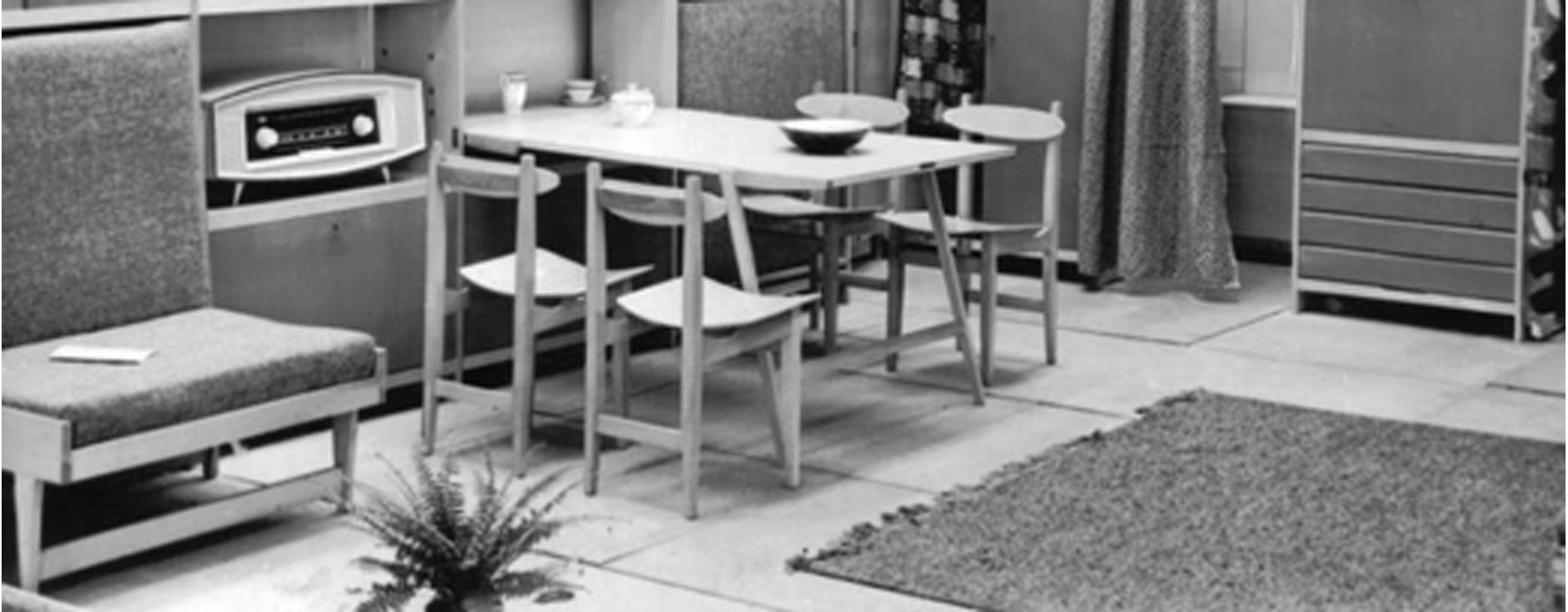
How Eastern European Furniture Quietly Entered British Homes
Anyone who spends time buying or selling mid century furniture eventually notices a same familiar pattern. When you spin them over, you find a faint factory stamp reading Poland, Czechoslovakia, Yugoslavia or Romania. Even today, these pieces turn up constantly in auctions, charity shops and house clearances.
Many people assume they were cheap imports or lookalike copies of Scandinavian design, the reason they are not is because they are so prevalent still. Unlike modern flat pack that has already been outlasted. The reality is far more interesting. From the 1950s through to the 1980s, Eastern Europe became a powerhouse of furniture production. That production flowed steadily into Britain, often without customers ever realising where their furniture came from or why it was suddenly so modern compared to earlier, heavier styles. It was the unnoticed design migration of post war Europe, carried into sitting rooms on slender atomic legs.
Why Eastern Europe Became One of the World’s Largest Furniture Producers
After the Second World War, many Eastern European countries moved into centrally organised economies. Large state run factories were expected to produce furniture on a scale never seen before. Exporting these goods was crucial because it brought in Western currency. Britain, still recovering economically, needed modern furniture at a reasonable cost. Eastern Europe had exactly what was required. Eastern Europe had that great asset Western businesses could only have dreamed of, cheap labour and material costs.
But also, these countries retained deep traditions of cabinetmaking, with highly trained woodworkers and engineers who simply moved from pre war artisanal workshops into vast post war industrial plants. They also had abundant access to timber, both hardwood and veneer quality woods. Massive factories in places like Poland and Czechoslovakia could produce furniture quickly without compromising basic quality. British wholesalers and catalogue companies placed enormous orders for items that were modern in shape, easy to ship, and affordable for young families setting up their first homes. This is why so many “ordinary” British homes from the 1960s onwards contained a surprising number of Eastern European pieces without anyone ever noticing.
How Politics, Modernism and Mass Production Shaped the Retro Style
The style we now call retro did not emerge only from artistic choice. It was also driven by politics. Post war Eastern European governments wanted to project a modern, progressive vision of domestic life. Functional modernism, clean lines and uncluttered spaces were seen as symbols of a contemporary socialist state. Many of the forms mirrored Scandinavian design, but not because of direct imitation. Both regions favoured simplicity, practicality and shapes that could be made efficiently in factories. The result was furniture with tapered legs, light geometric forms, modest use of timber, practical surfaces and a compact scale ideal for smaller flats. The iconic atomic leg that appears on so many plant stands and coffee tables was both fashionable and easy to mass produce. Laminated surfaces and varnishes were chosen for durability, not glamour, and they survived decades of family life remarkably well. When British families bought these pieces, they were not consciously choosing “Eastern Bloc design.” They were buying furniture that was, quite simply, modern, affordable and visually fresh.
Why So Much of It Survives and Why It Became Retro Gold
Three forces ensured the survival of this furniture in, quite frankly, astonishing quantities. First, the craftsmanship was better than people give it credit for. Second, the furniture was compact and useful, meaning families kept it for decades. A small bedside table or coffee stand is more likely to be passed from room to room and generation to generation than a large wardrobe or cabinet. Think of transport costs importing massive wardobes for in today’s money £200 when you can fit £1000 of flat pack and smaller items, the economy of scale.Third, the finishes were robust. Varnishes and lacquers used in Eastern Europe stood up extraordinarily well to heat, sunlight and daily wear.
As a result, these pieces aged slowly and consistently. When the retro revival took hold in the early 2000s, and magazines rediscovered the clean geometry of mid century modernism, all those old Polish and Czech pieces suddenly looked stylish again. Many had spent years in attics, student accommodation and bedsits or shuffled off into spare rooms, ageing quietly, waiting for a world that would appreciate them properly.
Now they are bought as statement pieces in contemporary homes, admired for their authenticity, modesty and quiet design intelligence. A coffee table stamped Poland or a bedside cabinet marked ČSSR is not a cheap imitation but a surviving piece of social history. It represents a forgotten industrial movement that shaped the look of mid twentieth century Europe and continues to sit comfortably in twenty first century interiors.
#Retro Furniture #Interior Design #Eastern European Furniture #Mid Century Modern #Furniture Blog

 The Rights of Fans.