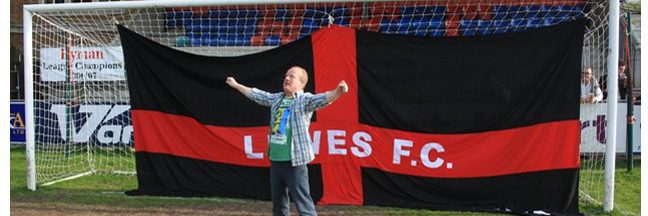
by Chris Harris

13/12/25 Dulwich Hamlet FC 1-4 Lewes FC. A great result, but the truth is the real winner over the last few years has been Dulwich Hamlet FC, a club the leadership at Lewes FC failed dismally to emulate.
Dulwich Hamlet are a phenomenon as well as football club. It’s not about results, they sell a feeling, a sense of belonging. People go to Champion Hill for a day out rather than a league position: music, beer, friends, irony, and the sense of being part of something recognisable and comfortably “not Premier League”. The football can be mediocre without damaging the regular 2500 attendances because the matchday experience is the product. Dulwich lean into self-mockery and low expectations, which lowers emotional risk. Winning is a bonus, losing is shrugged off. Many of us at Lewes from years ago will recognise that. Lots of us were initially drawn to the club to have fun, drink, shout and if we won great.
They also function as London’s against modern football standard bearers, attracting supporters who feel alienated by corporate football, pricing, tourists, VAR, and sterile stadiums. Much of the crowd isn’t traditional non-league at all: many didn’t grow up with the club, have no generational ties, and wouldn’t normally watch this level of football. They’re drawn by culture, politics, and community rather than promotion pushes or tactical nuance. Champion Hill’s location helps, but more importantly Dulwich don’t promise ambition or success. By refusing to make success the main focus they avoid pressure and disappointment. What they offer instead is belonging without obligation, football without stress, and community without demands, and for many supporters, that’s more than enough.
Surely Lewes FC could emulate this, trendy town, a massive volunteer army in our 6 huge Bonfire societies, wealthy area, brilliant ground, brilliant location, near Brighton, ‘cool’ branding (gimmickry) beach huts for ‘executive boxes,’ a high profile media exposure, ‘fan-ownership’(ha ha) and Equality FC. All of the ingredients to become bigger than Dulwich. Sadly this ambition and opportunity was left in the hands of a group of clueless people who thought they were all so amazing it would simply fall into place. No understanding of the town, football culture, catering, match and entertainment management, people who thought they were so clever they could rewrite the system.
As Equality FC, the brilliant Lewes FC initiative for the advancement of women in football, took off, before it crashed, parts of the Lewes FC leadership were quite open about what they wanted the club to become. Cool, marketable. They wanted a slick compliant product. They wanted a club that looked good in photographs and articles, one that travelled well beyond Sussex and sat comfortably in the same cultural space that Dulwich Hamlet now occupies. Progressive, fashionable, talked about with sold out games and massive interest in the club.
But seven or so years on, the demolition of the comparison is painful. Dulwich Hamlet are still a genuinely trendy and revered football club, and so much more. Lewes FC, by contrast, bereft of the original pioneering ideas to compete with Dulwich, and the many arrogant actors behind it are now seeking other ways so slay their egos. Because this is about culture, something that cannot be designed in a boardroom.
Dulwich Hamlet didn’t try to be cool. It just was. Its identity grew from the terraces upwards, not from publicity grabs, strategy documents, branding initiatives or mission statements. It emerged from supporters, music, local politics and a messy collision of football, art, protest and community. It was loud, imperfect, occasionally chaotic and unmistakably real. By the time journalists and designers noticed Dulwich, the culture was already there. The club didn’t invent it. It simply evolved through human contact and ideas.
Lewes tried to do the opposite.
Lewes FC attempted to build culture by management, right through the core, even ‘light touch’ dictatorship on social medias where supporters were fed the club line, not invited to discuss it without being barracked by the leadership lackeys. The board, having already paid mere lip service to the values of fan ownership, doubled down, and whilst all of the marketing at the time bought in new fans, it simply was not the numbers they wanted with many existing fans deciding to give way to the oncoming circus and seek enjoyment on a Saturday elsewhere, as a visit and experience at the Dripping Pan was reinvented and articulated by the board and deemed hollow.
The messaging was polished before it was proven to work, literally a “we can reinvent football around our vision, after all, aren’t we so clever”. Equality, ethics and social purpose were elevated to headline status before the club itself had worked out a platform to progress it naturally. The result was a club that looked and sounded right, but felt wrong. Curated brilliantly, but putting football second, always a flawed strategy. Cool is not created by correct language; it emerges from risk, contradiction and trust. Lewes FC chose control.
As values blurred into branding, branding slid into gimmickry. Slogans, statues, veg patches in the ground, ethical campaigns, tedious publicity grabs and positioning began to stand in for atmosphere, football competence and genuine supporter ownership. It played to a limited core of new fans, most of whom have already buggered off, but was just a desperate battle cry from a leadership and cronies who simply had no background and understanding in non-league football.
As the gap widened between what the club said it was and what matchday and expectations actually felt like, supporters quietly drifted away. Women’s attendances have dropped 200% since relegation, because the money no longer existed to make a big hurrah about everything Lewes FC did.
Gates do not fall because people reject values. They fall when people sense those values are being used as positioning rather than practice. When football feels secondary, when community feels managed rather than organic, and when authenticity is replaced by messaging, even well-intentioned clubs haemorrhage their audience. Lewes’ declining attendances are not a mystery. They are the predictable outcome of mistaking marketing for culture.
In trying to appeal to a global, progressive, media-friendly audience, the club quietly drifted away from its natural base. Local supporters felt managed rather than included. The club talked endlessly about community while amazingly gradually hollowing out the one it already had.
You cannot design cool. You can only allow it. Dulwich are imperfect. They argue. They lose control. They let supporters shape the space, even when it’s inconvenient. Lewes wanted the reputation without the disorder. They wanted Dulwich’s cultural capital without Dulwich’s risk, noise or unpredictability. They wanted admiration without surrendering authority. That is why they never got it. Dulwich’s leadership would embrace our fanzine and my blog as it creates energy and ideas, the current Lewes FC leadership hate me, and that’s according to Sussex Police, fact!
Supporters attend because they want to be there, not because they have been promised progress or sold an idea. In that context, results genuinely matter less. Winning is welcome, losing is absorbed, and league position does not define the club’s worth. Most Lewes FC fans are the same, they love Lewes FC and would if we were in the Sussex county leagues, it is football culture not silverware we value.
This is why Dulwich’s crowds persist regardless of form. Supporters are not consumers hoping for the promised delivery, where matchdays are their sole involvement with the club, they are participants in something they recognise as theirs. The atmosphere does not need to be manufactured or explained because it already exists. By allowing culture to lead and football to follow, Dulwich have built something emotionally durable and socially magnetic. It may not translate into promotions or silverware, but it produces loyalty, resilience and relevance — qualities far harder to fabricate, and far more difficult to lose.
Football clubs are not campaigns. They are ecosystems. You cannot substitute lived culture with branding. You cannot replace trust with messaging. You cannot make people love something by telling them why they should. Lewes FC didn’t fail because it lacked good intentions. It failed because it confused being right with being loved.
#Lewes FC #Dulwich Hamlet FC #Non League Football #Non League Football Blog #Football

 The Rights of Fans.