by Chris Harris
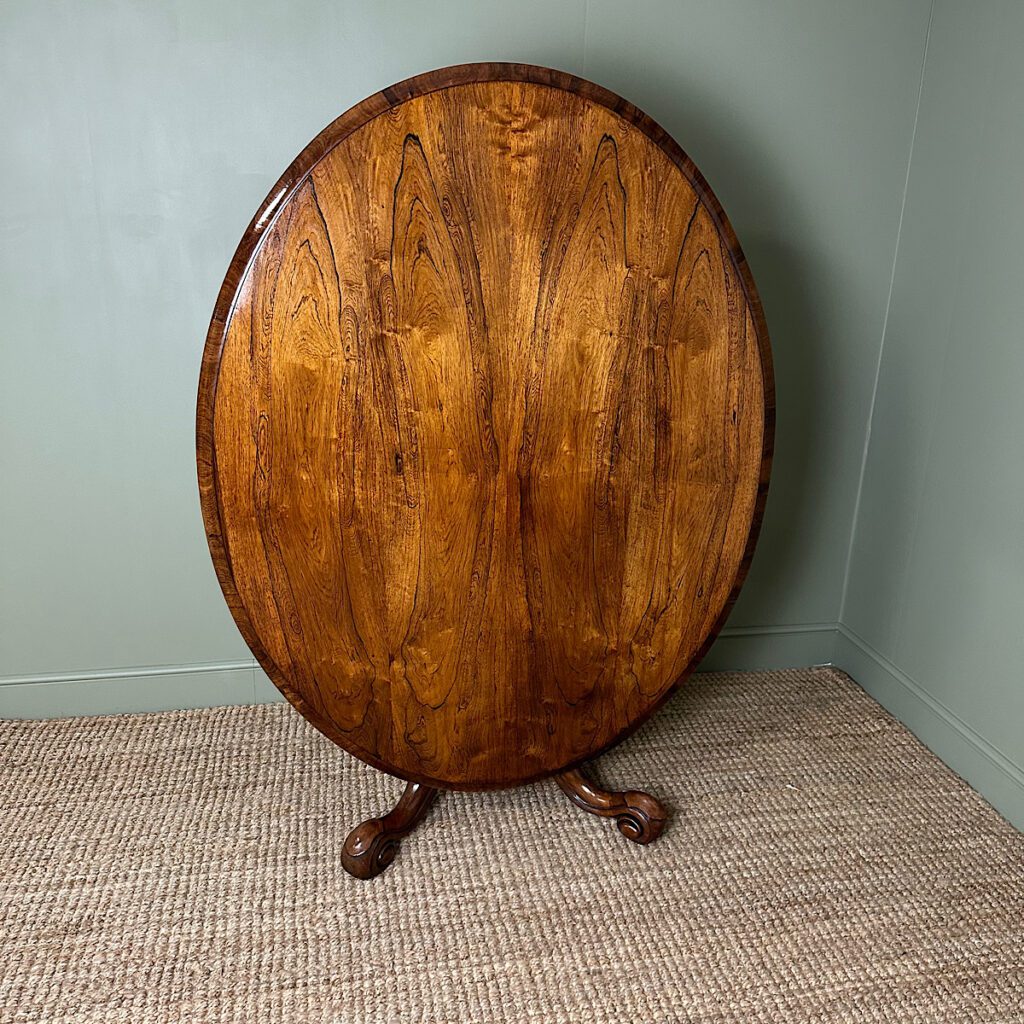
Rosewood is a beautiful grained wood, it is outstanding in appearance and quality. Even when it’s old and knackered on an old piece of furniture, it still has that deep, oily richness that makes other woods look a bit humdrum. I’d say it’s the timber equivalent of a perfectly worn leather jacket: it carries its own authority.
Which is why it is prevalent in Victorian furniture.
Or rather, it was, because rosewood has now entered that awkward modern category of things that are beautiful, historic, and (depending on species and paperwork) effectively restricted to the point that some vintage selling platforms treat it as “banned”.
So what is rosewood, why did Victorians love it so much, and why does it now cause such anxiety in the vintage world?
What rosewood actually is — and why the Victorians fell for it
First: rosewood isn’t one single wood. It’s a name most often used for “true” rosewoods in the Dalbergia genus, though people sometimes use it loosely for other dark hardwoods too. That distinction matters today, because Dalbergia is where most modern restrictions focus.
But the Victorian obsession is easy to understand without the botany.
Rosewood is dark, dense, and full of natural drama. The grain often has streaks and movement that look almost like ink in water. It takes a polish beautifully, meaning it looks rich even in poor light, and in a candlelit Victorian room it would have looked luxurious in a way that lighter woods simply couldn’t. It is basically the Rolls Royce of woods.
And Victorian Britain loved luxury and showing off.
Most Victorian rosewood furniture wasn’t made from solid rosewood (that would have been ruinously expensive and heavy). Instead, makers used veneers: thin sheets of rosewood laid over more cheaper structural timber like pine. Veneering was clever because it gave you the look, the status, without needing an entire tree for one sideboard. It also allowed for book-matched patterns that look almost deliberately designed.
Rosewood became shorthand for quality, seriousness, and taste.
Why rosewood is basically “banned” now (and who decided that)
This is where it gets complicated, because rosewood isn’t “banned” in the casual sense, like ivory. What’s happened is that international trade restrictions have tightened so much that, in practice, it often feels banned, especially online.
The main reason is CITES (the Convention on International Trade in Endangered Species). CITES is the international system that regulates trade in protected plants and animals. Member countries implement it through their own laws, which means restrictions can bite hard once the paperwork gets involved.
Rosewood became a huge target because the modern timber trade turned it into a perfect storm: luxury demand, rarity, illegal logging, and laundering. It’s not just about felling one tree. It’s about what follows: extraction roads cut through forests, habitats broken apart, ecosystems degraded, and “high value timber” trade that often becomes entangled in corruption and organised networks.
A key turning point came when CITES expanded restrictions so that all Dalbergia species were brought under regulation (with some exemptions and specific annotations). That’s why rosewood suddenly became a minefield for makers, dealers, and sellers.
Then there’s the big one: Brazilian rosewood (Dalbergia nigra). This is listed on CITES Appendix I — the strictest category — and it’s the one that causes the most problems for vintage sellers. It’s also where you start hearing about Article 10 certificates (in the UK/EU context), which are required for certain kinds of sale of highly protected species.
So who “bans” rosewood?
Not Etsy. Not Vinterior. Not eBay.
It is frowned upon and in the case of Vinterior you have to jump through hoops to get it shown on a listing. Because it is old wood, the damage is done.
The restrictions come from international and national law. Platforms simply tighten their policies because they don’t want the liability, and because “antique rosewood” is one of the easiest labels for illegal timber to hide behind.
The morality question: does banning the sale of antique rosewood actually make sense?
Here’s the problem the antiques world can’t escape.
If you’re selling a Victorian rosewood table, the tree was felled over a century ago. The ecological damage has already happened. The object exists and will continue to exist whether it’s sold, inherited, donated, restored, or shoved into storage.
So is it morally coherent to restrict the resale of antique rosewood?
One argument says yes: because markets create demand, and demand creates cover. If illegal modern rosewood can be passed off as “antique,” then antique trade becomes a laundering route. Restrictions reduce that risk and protect forests now.
But the counter-argument is hard to dismiss: antique rosewood is arguably the most sustainable kind of rosewood transaction possible. It doesn’t create new logging. It doesn’t fell new trees. It’s reuse. It’s the circular economy in physical form. If we ban the selling of old rosewood entirely, we haven’t saved a single tree — we’ve just made heritage harder to pass on.
Maybe the truth is that rosewood can’t be treated as one simple category. Some species are heavily protected, some less so, and regulation tends to bite hardest when items cross borders. That’s why sellers find it so inconsistent: one platform may demand clear documentation, another simply says “comply with the law,” and a third quietly removes listings that mention Brazilian rosewood without proof.
It leaves antique dealers and vintage sellers stuck in an awkward place: you’re dealing in historic objects, but the modern world sees rosewood as a current ecological crisis — which it is.
So perhaps the most honest position sits somewhere in the middle.
Yes, modern rosewood extraction has caused real damage and needs strict enforcement. But antiques are not the same moral category as newly harvested luxury timber. The object already exists. The tree has already fallen. The sensible focus should be on transparency, documentation where necessary, and stopping new laundering — not on treating every Victorian veneer piece as if it’s a fresh crime scene.
Because rosewood, now, isn’t just a wood.
Want this kind of writing in your inbox? I publish on Substack — subscribe (free) here and you’ll get new posts as they drop: https://therightsoffans.substack.com/publish/home
#vintage rosewood #antique rosewood #antique furniture #CITES #banned wood

 The Rights of Fans.