
by Chris Harris
Compactums were a defining feature of late Victorian and Edwardian bedrooms, but they’re now largely forgotten — and for understandable reasons.

Originally, a compactum was an amalgamation of essential bedroom furniture into one enormous piece. Typically, you’d have two single wardrobes flanking a central section that functioned as a linen press, complete with drawers below and cupboard space above for bedding and household textiles. Practical? Absolutely. Subtle? Not remotely.
They fell out of favour fairly quickly. Compactums demanded space, which meant their natural habitat was large houses with generously proportioned bedrooms. By the 1920s, tastes — and houses — were changing. The rise of the bedroom suite broke these functions into separate pieces: wardrobes, chests of drawers, dressing tables, each standing alone and far more flexible. The compactum quietly exited the stage.
We all understand the idea of a built-in wardrobe now. They’re everywhere. But what I had never seen in my life until recently was a built-in compactum — or rather, part of one.
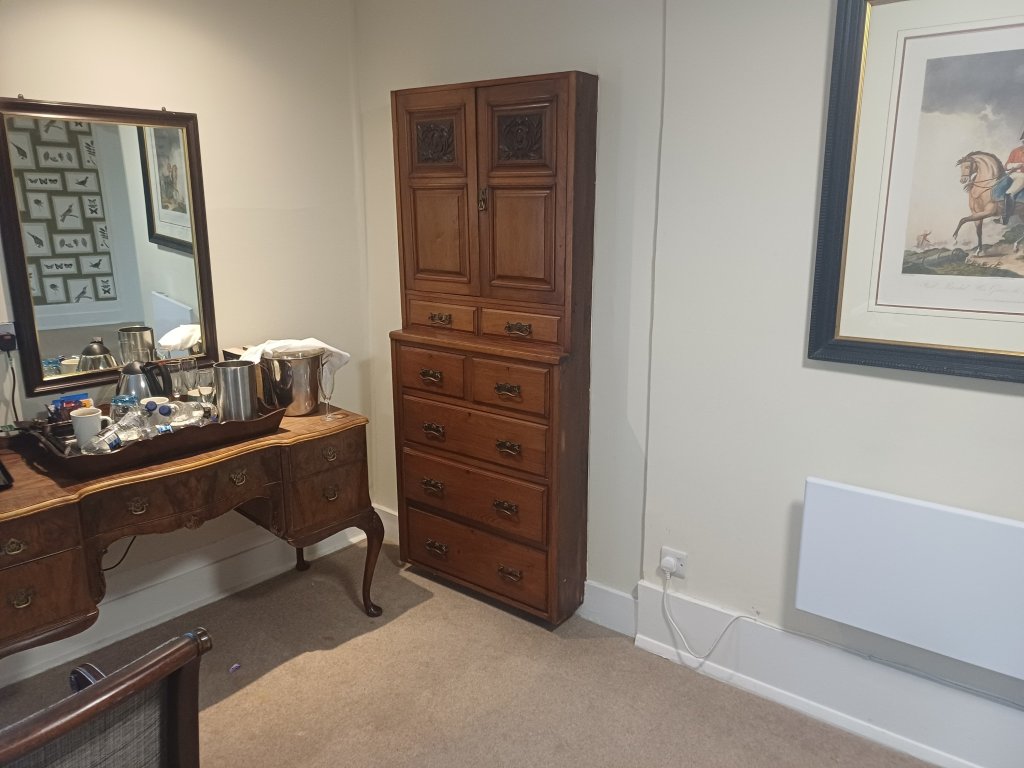
While staying at the Norfolk Arms Hotel in Arundel, I came across something genuinely fascinating. At some point in the building’s history, someone had removed the central section of a Victorian compactum and recessed it into the wall. At first glance, this might seem nonsensical — until you realise what’s on the other side of that wall: the bathroom and the layout of the two.
Suddenly, it all makes perfect sense
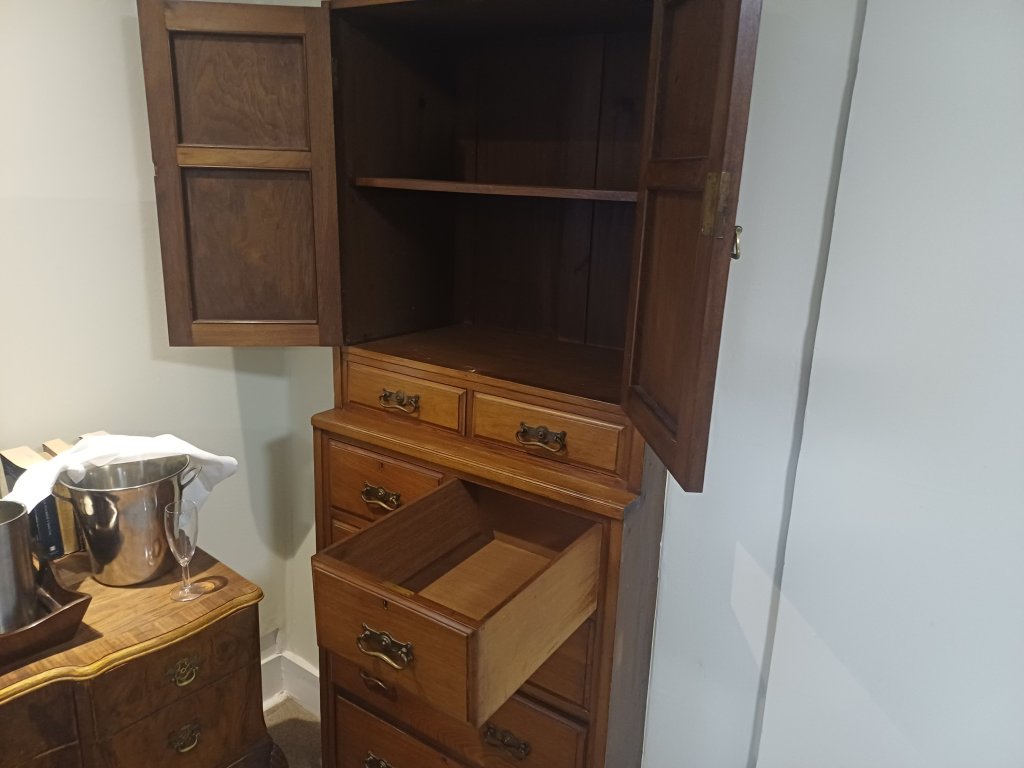
This is a very clever use of space, particularly in an old building where walls are thick, layouts are fixed, and listed-building restrictions likely limit what can and can’t be altered. By sinking the central linen press into the wall, the hotel has preserved a beautiful piece of furniture and gained practical storage without sacrificing floor space. For a hotel room, it’s absolutely ideal — and visually, it looks fantastic.
The piece itself dates to around 1900 and appears to be made primarily of mahogany, possibly with walnut detailing. Had it been left freestanding — stripped of its flanking wardrobes — it would have looked awkward and overly bulky. As a standalone object, it would have dominated the room and made little decorative sense. Recessed into the wall, however, it becomes elegant, functional, and quietly impressive.
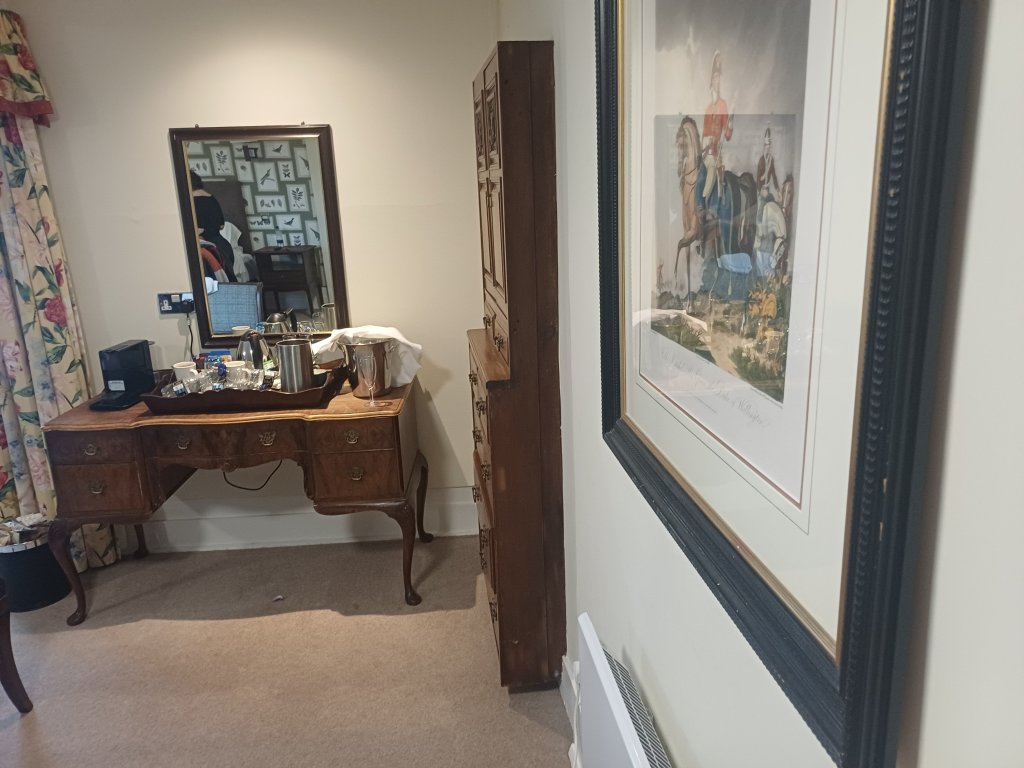
What really elevates this is the finish. It looks to me as though the piece retains its original surface, carefully stripped back and repolished rather than aggressively restored. There’s a maturity to the timber that you simply can’t fake.
I like to imagine that this compactum originally lived in one of the grander rooms of the hotel and became surplus to requirements during a refit. Instead of being discarded, someone had the imagination — and confidence — to see what it could become. That kind of thinking is rare.
This isn’t just reuse; it’s intelligent repurposing. The furniture hasn’t been diminished — it’s been recontextualised. Its original purpose has been respected, its bulk tamed, and its craftsmanship allowed to shine in a way that actually suits a modern interior.
So yes, credit where it’s due: the Norfolk Arms deserves recognition for this. And whoever had the idea in the first place was a very, very smart person indeed.
If you care about furniture, space, and thoughtful design, this is exactly the sort of thing to look out for — proof that the best interiors aren’t always about buying new, but about seeing old things properly.
#Vintage Furniture #Antique Furniture #Upcycling #Interior Decor #Bedroom Design

 The Rights of Fans.