by Chris Harris
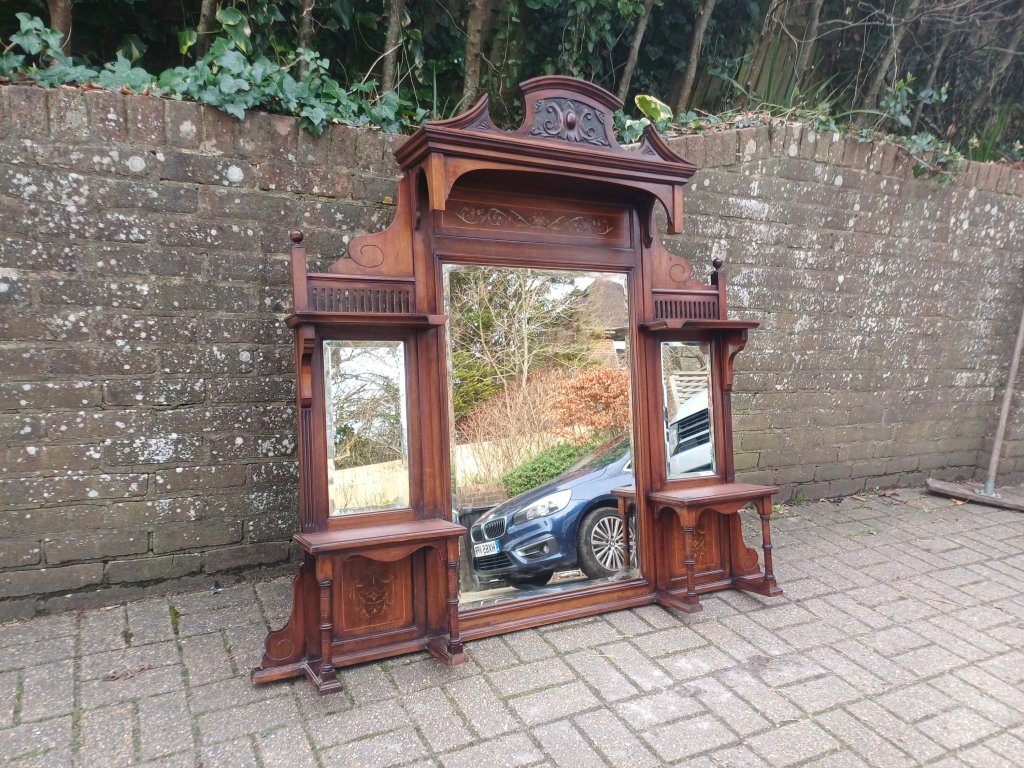
Even the greatest creations eventually fail. That’s the reality of age. Old things disintegrate. Not in the same way as modern flat-pack furniture built to survive three years and a house move — but even the finest, most beautifully crafted antique pieces eventually suffer structural decline.
Take this huge late Victorian over mantel. It was once magnificent. Large, imposing, beautifully made from quality timber, with heavy turned columns that weren’t just decorative — they carried weight. They were integral to the structure. Sadly, they have failed completely. Beyond repair.
To replace them properly would have meant commissioning bespoke turned columns to match the originals exactly. Skilled craftsmanship, significant time, serious cost. By the time the work was done, the restoration would have exceeded the value of the piece itself. That’s the uncomfortable truth about antique furniture: not everything is economically viable to repair. The repairs would never blend in properly with new wood.
Most pieces in this condition don’t get rescued. They go to house clearance companies. From there, to market. If they don’t sell, they go to the tip. It’s blunt, but it’s reality. Not because they’re ugly. Not because they lack history. But because restoration doesn’t stack up financially.
So what’s the alternative? Repurpose. Upcycle. Adapt.
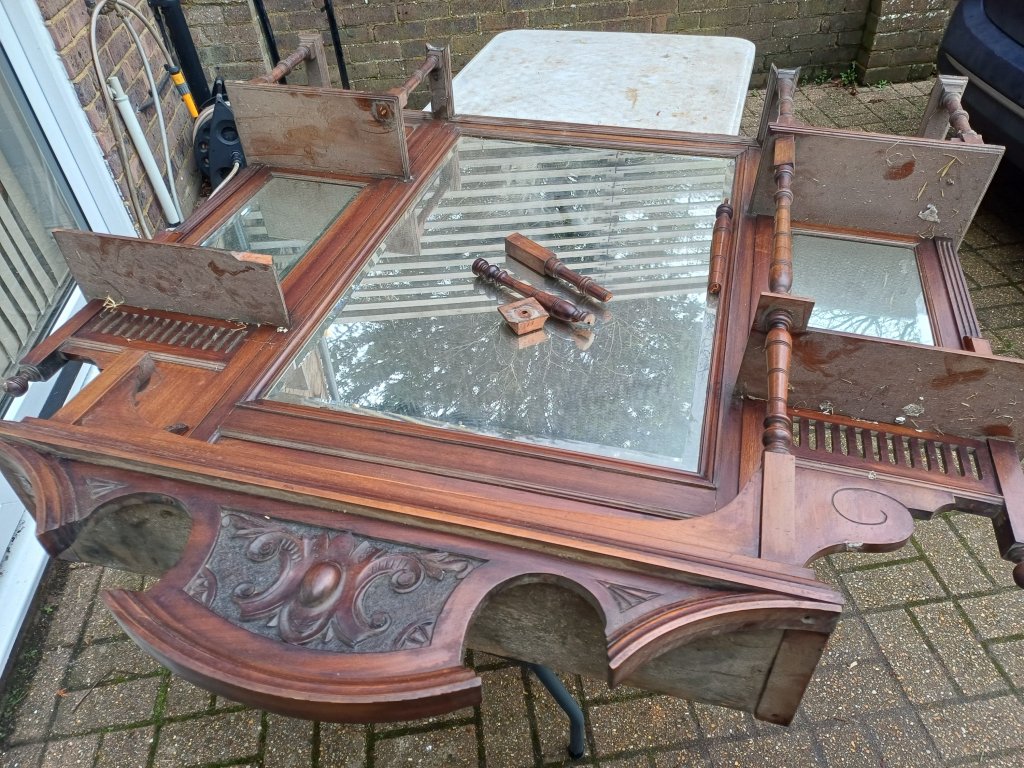
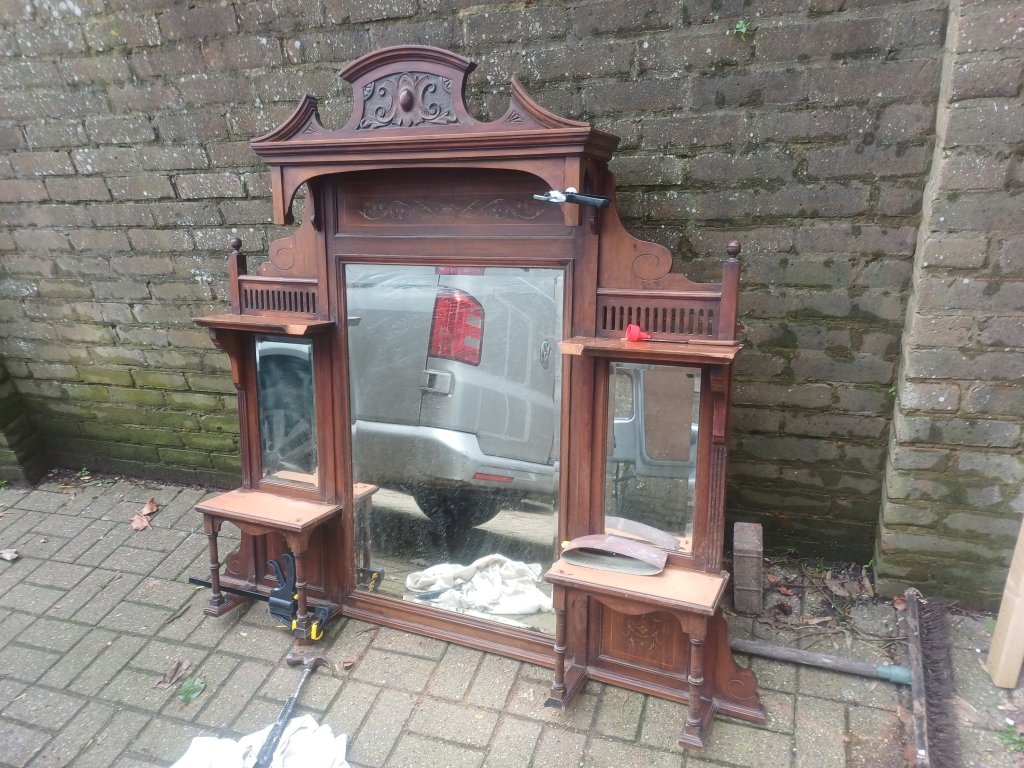
Instead of replacing the broken columns, I removed four of them completely. I filled the holes cleanly, removed damaged sections, re-sanded and re-stained. The entire operation took about an hour. No heroic restoration. No museum-grade reconstruction. Just practical, thoughtful adaptation.
The result is a terminally ill over mantel saved from landfill. Is it perfect? No. Would I normally retail a pristine example like this at £1,250? Absolutely. In this condition, with structural changes and missing original features, it’s worth around half that. But it still looks stunning.
Overhauled furniture like this used to be overlooked, seen as ruined, increasingly, buyers don’t want sterile perfection. They want character. They want honesty. They want pieces that show age, that tell a story, that have lived a life. Distressed. Upcycled. Rescued. These words carry weight now.
This over mantel, imperfect as it is, still commands presence. It still transforms a room. It still does the job it was made to do — and it does it beautifully. Most importantly, it didn’t end up at the tip. In fact, I sold it within a day to a large pub in Cardiff! Think about it, they wanted something impressive, a statement piece, and it does not matter if it isn’t perfect, in fact maybe better that it isn’t.
There’s a difference between restoration and salvation. Sometimes saving a piece doesn’t mean returning it to its original form. It means adapting it so it can survive another generation. Furniture was built to last — and often it can — if we’re prepared to rethink how we approach damage and imperfection.
Repurposing isn’t cutting corners. It’s respecting materials, respecting craftsmanship, respecting history, and accepting that perfection isn’t always the goal. Sometimes survival is. And in this case, that’s exactly what happened: a beautiful piece of furniture saved, not because it was flawless, but because it was worth keeping.
#Antique Restoration #Repurposing #Vintage Project #Vintage Restoration #Antiques Blog

 The Rights of Fans.